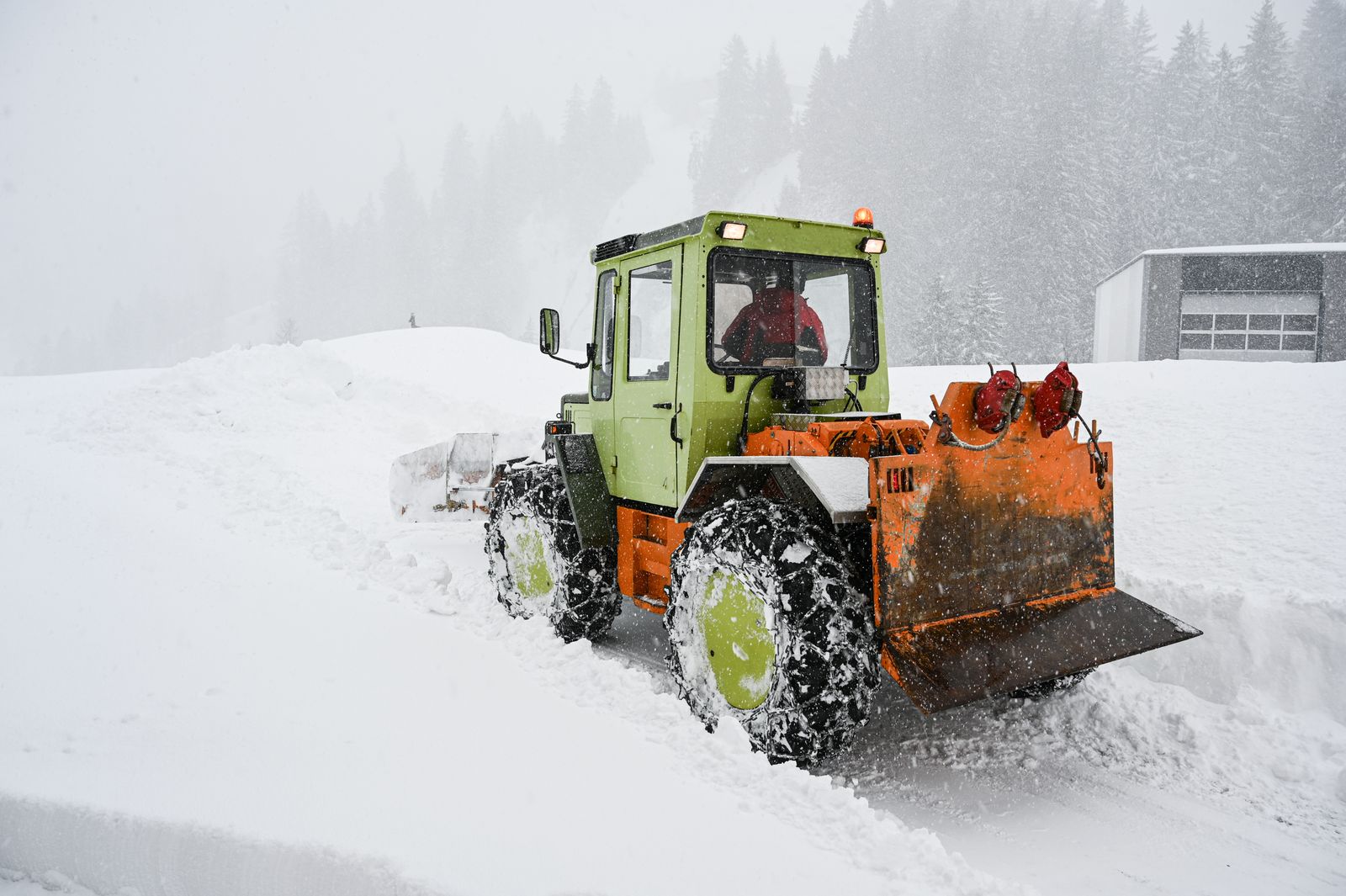
Every parking lot has a snow budget of a different kind: physical space. Three storms into a hard winter, the piles are two stories tall, they’re eating parking spaces, and meltwater is refreezing across the drive lanes. Snow hauling and stacking is the part of commercial snow management nobody thinks about in October and everybody argues about in February. Here’s how professionals handle it — and price it.
Stacking Strategy: Get It Right in the Site Plan
Where snow goes should be decided before the season, marked on the contract’s site map. Good stacking locations are downhill of drainage (so melt runs to catch basins, not across walkways), away from building entrances and sight lines at exits, off the septic field, and clear of fire hydrants and utility boxes. Bad stacking — piles at lot corners blocking visibility, or uphill of pedestrian routes — creates the exact slip-and-fall and accident liability the contract exists to prevent.
Equipment matters too: trucks push piles wide and low; a loader or skid steer stacks vertically, doubling or tripling how much snow the same footprint holds. Sites serviced by loader-equipped contractors simply run out of room later.
When Stacking Isn’t Enough: Relocation and Hauling
Three escalation levels:
On-site relocation: a loader moves piles from prime parking to a far corner or grass area. Cheapest option — typically billed hourly ($150–$350/hr for loader work).
Off-site hauling: loader plus dump trucks cycling snow to an approved dump site. Costs stack up fast — $150–$500+ per hour for the combined operation, and a big lot after a blizzard can take many truckloads. Note that many municipalities regulate snow dumping (chloride-laden snow can’t go in wetlands or waterways), so legitimate dump sites may be limited and not free.
Snow melters: for dense urban sites with zero space, industrial melters burn fuel to turn snow into drainable water. Expensive, specialized, mostly a big-city and airport tool.
Who Pays? Settle It in the Contract
This is the #1 winter billing dispute. Standard practice: routine stacking is included in per-push or seasonal pricing; relocation and hauling are separate, pre-priced line items triggered by owner request or defined conditions (e.g., “when accumulated piles occupy more than X parking stalls”). Both sides should want this in writing — owners avoid surprise invoices, contractors avoid doing loader work for free. Our contracts guide covers the clause language.
For Property Owners: Questions to Ask in the Fall
Where exactly will snow be stacked (get it on a map)? At what point does hauling kick in, and at what rates? Who monitors pile encroachment — you or the contractor? How fast can hauling be mobilized after a major storm? A contractor with crisp answers has done this before; vagueness now is an argument later. More vetting questions in our guide to choosing a commercial snow contractor.
For Contractors: Hauling Is a Profit Center
Priced correctly, hauling is some of the best-margin work of the winter — equipment-heavy, schedulable (it happens after storms, not during), and billed hourly. The contractors who lose on it are the ones who never put it in the contract and end up eating “just move those piles real quick” requests. Pre-price it, every bid, every year.