Current Conditions: All service areas are currently clear of snow and freezing temperatures.
Snow Removal in Grand River, Ohio
Professional, reliable snow plowing, salting, and ice control for homes and businesses across the village — from the marinas and fish houses along the riverfront to River Road, Singer Avenue, and every lane in between.
Grand River snow removal is small-town shoreline work at its most personal. This is one of Ohio’s smallest villages — a few hundred residents on the west bank of the river that shares its name — but its marinas, charter docks, and famous fish houses draw visitors from across Northeast Ohio in every season. When winter closes in on the harbor, the village still has to move. Local Snow Removal keeps driveways, parking lots, and sidewalks across the village clear and safe all winter, with equipment staged nearby before each storm and 24/7 dispatch behind it.
Snow Removal in Grand River, Lake County
The village occupies barely a square mile where the river bends into its final run to Lake Erie, across the water from Fairport Harbor and north of Painesville, with River Road and Singer Avenue carrying most local traffic down to the docks. The Cleveland NWS station averages 63.8 inches of snow a year, and this exposed river-mouth pocket regularly takes the sharp edge of every band that comes ashore. You can read more about the village on Wikipedia or U.S. Census data.
Our operation is built for the village’s scale and its weather. We track pavement temperature and forecast bands for the harbor area specifically, and because our crews already run the whole Painesville lakeshore, the village sits inside a dense route rather than at the end of a long drive — which means fast response even for a town this size. Dispatch is automatic once snow reaches your contracted trigger depth. The restaurant lots that fill up on winter weekends, the marina yards with boats in storage, and the short residential lanes off River Road all get cleared on a plan set before the first flake fell. Whether you live here year-round or manage a waterfront business that cannot afford an icy parking lot on a Friday night, you get the same disciplined, insured, around-the-clock coverage all season.
Services Available in Grand River
We offer a complete suite of winter management services designed to keep Grand River moving.
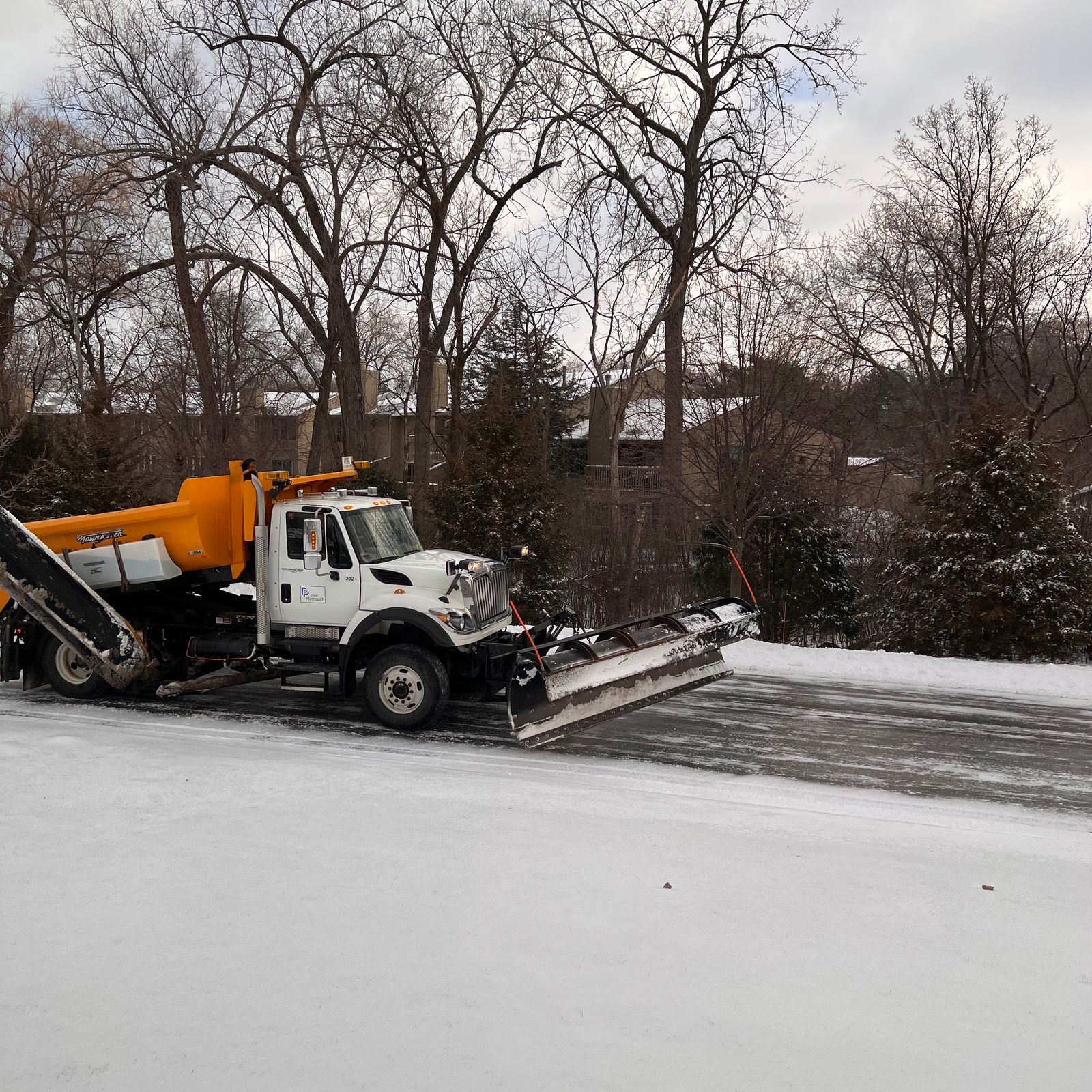

Residential Snow Removal
Driveways and walkways cleared before the morning commute, dispatched automatically at your trigger depth. You never have to call.
Commercial Snow Removal
Zero-tolerance programs for retail, office, medical, and industrial properties citywide.
Salting & Ice Control
Brine pre-treatment and temperature-matched de-icing keep black ice off your pavement through every freeze-thaw cycle.
Emergency Snow Removal
When a heavy band or ice storm hits, our 24/7 emergency crews dig you out.
7 Reliable Reasons to Trust Local Snow Removal in Grand River
- Pre-staged, rapid response. Equipment runs the Painesville lakeshore route past the village before the first flake falls, so contracted properties are cleared fast.
- Fully licensed and insured. General liability, commercial auto, and workers’ comp on every job.
- Residential and commercial expertise. From village driveways to restaurant lots, marina yards, and dock access lanes.
- Proactive ice control. River mist plus freeze-thaw means black ice; we pre-treat and de-ice before it forms.
- Transparent, upfront pricing. Flat, agreed-upon rates and clear seasonal contracts — no surprise invoices.
- Local crews who know the terrain. Operators who understand how the river funnels wind, where the low bank floods and refreezes, and which lanes drift first.
- 24/7 emergency dispatch. Someone is always on call, with medical and senior-access sites first.
Those seven principles are why homeowners and waterfront business owners across the village renew with us winter after winter. Snow and ice are safety and liability issues first and conveniences second; one slip-and-fall outside a busy fish house on a winter Friday can cost far more than a season of professional service. Our job is to take that risk off your plate entirely, so you can focus on your family or your business while we handle the pavement.
About Grand River: History, Attractions & Local Landmarks
The village is home to landmarks our crews work around all winter. Notable spots include the famous riverfront fish houses — Pickle Bill’s Lobster House and Brennan’s Fish House have anchored the waterfront for generations — the marinas and charter docks along the west bank, and the Landing park with its river-mouth views. Click any to open it on Google Maps:
A fishing and shipping settlement since the early 1800s, the village has stayed what it always was: a working riverfront town where the boats matter and everybody knows everybody. That character shapes winter here. The restaurants draw crowds straight through the cold months — a snowy Friday does not cancel dinner at a fish house, it just makes the parking lot dangerous if nobody treats it. The marina yards need clear access for winter boat work, and the handful of residential lanes hold many long-time residents who should not be shoveling wet lake snow. Our crews keep the roads, entrances, and parking areas around the waterfront clear through every storm, and the same care carries over to every home in the village. When a squall builds over the open lake, this river mouth is among the first places we watch. Ice fishing crews, winter walkers, and off-season boat owners keep the waterfront busier than outsiders imagine, and safe pavement is what makes all of it possible.
Grand River by the Numbers: Census & Local Data
Here is a snapshot of the village from the latest U.S. Census and public data:
A note on those numbers: the village itself is home to about 350 people by the census count — one of the smallest municipalities in Ohio — so the median income and home value shown reflect the surrounding greater Painesville area that shares its market. What the numbers cannot show is the village’s outsized winter workload: restaurant and marina parking that serves visitors from across the region, dock lanes that need access in every month, and a compact street grid that our crews can clear fast precisely because it is small. Every household and waterfront business needs safe access from the first storm to the last thaw, and matching the right crew to each is exactly what we do. That is the advantage of being genuinely local: we price the village on its actual footprint rather than a formula built for suburbs, and residents here often pay less than they expect for full-season coverage.
Popular Grand River Neighborhoods We Serve
From the riverfront restaurant row to the short residential lanes off Singer Avenue, we clear driveways, sidewalks, and lots in every corner of the village. Dense routes matter in this business: the more neighbors who sign with the same crew, the faster everyone gets cleared and the better the pricing works for all of them — and in a village this size, a handful of signups puts the whole town on one fast route. Ask a neighbor who they use — chances are good it is us, and adjacent signups sharpen everyone’s price. Click any neighborhood below to see it on Google Maps:
Grand River Area Codes & ZIP Codes We Cover
Grand River is served by area code(s) 440. Our coverage spans every ZIP code in the village. Click any to open it on Google Maps:
If your ZIP code is on this list, you are inside our service area. ZIP 44045 belongs to the village alone — a rarity for a town this size. The ZIP is linked to Google Maps so you can pinpoint your location and see exactly where our routes run. And if you are just over the village line, we cover every neighboring community too.
Grand River Snowfall: 10-Year History & Monthly Averages
How much snow does the village get? The Cleveland NWS station records about 63.8 inches in an average winter (30-year NOAA normals), and this exposed stretch of shoreline typically sees that or more, wind-driven off the open water. The table below shows total measured snowfall at Cleveland for the last ten years, based on NOAA data via Current Results:
| Year | Snowfall |
|---|---|
| 2023 | 23.0″ |
| 2022 | 54.9″ |
| 2021 | 32.4″ |
| 2020 | 49.3″ |
| 2019 | 37.0″ |
| 2018 | 42.5″ |
| 2017 | 44.9″ |
| 2016 | 42.2″ |
| 2015 | 47.0″ |
| 2014 | 84.3″ |
| Month | Avg. Snowfall | Avg. Snow Days |
|---|---|---|
| October | 0.1″ | 0.2 |
| November | 4.5″ | 3.8 |
| December | 12.2″ | 8.4 |
| January | 18.4″ | 13.5 |
| February | 15.1″ | 10.5 |
| March | 10.8″ | 7.2 |
| April | 2.7″ | 2.1 |
Snow typically starts in November, peaks in January and February, and can linger into April, which is why our seasonal contracts cover the full winter window. The ten-year table shows how wildly totals swing from one winter to the next, and the open-water exposure adds its own bonus on top of whatever the official Cleveland gauge records. A mild December is no guarantee against a punishing February, so we build contracts around the whole season and our customers are covered either way. When a big system is inbound, we also top off salt and fuel at the start of the event rather than mid-storm, so coverage never pauses while the weather is at its worst.
Local Winter Challenges in Grand River
The defining challenge here is the river itself. Cold air drains down the valley and pools at the mouth, so pavement in the village refreezes earlier and harder than the blocks up on the bluff, and mist off the moving water glazes the dock lanes and low sections of River Road with black ice on nights when no snow fell at all. Our crews treat the glaze-prone zones on their own schedule, driven by pavement temperature rather than by what the radar shows.
Weekend traffic is the other factor. The fish houses fill their lots on winter evenings, which means clearing and treating cannot stop at dawn — the busiest pavement in the village needs service timed to dinner hours, cycled again as the wind re-drifts the open lots by the water. That is why plowing alone is never enough here: timed salting, drift management, and walkway finishing matter just as much, scheduled around how this village actually lives in winter rather than a generic suburban template. We also coordinate directly with the restaurants on event timing — a reservation-book Friday gets a different service plan than a quiet Tuesday, and that flexibility is something a big regional operator simply does not offer a town this size.
How Much Does Snow Removal Cost in Grand River?
Pricing here depends on property size, service level, and location. Residential driveways generally run about $40–$95 per push, with seasonal contracts commonly $400–$850 for the winter. Commercial pricing is quoted per property after a quick site assessment. Our Pricing Guide explains every contract structure, and a free, no-obligation estimate is the fastest way to a firm number.
Most local homeowners choose between per-push billing, which charges only when it snows, and a flat seasonal contract that fixes your winter cost no matter how many storms arrive — and on the shoreline, the seasonal rate is usually the smarter bet. The village’s short driveways keep residential pricing modest, and neighbors who sign together share one fast route. Waterfront businesses typically opt for seasonal or zero-tolerance agreements that keep lots, entries, and walkways clear to a defined safety standard through evening service hours. Salting and ice control can be bundled in or billed separately, and every quote is written up front with no hidden charges after a big storm. If you are comparing bids, make sure every quote names the same trigger depth and includes sidewalks, or the cheaper number may simply be buying you less. Snow piled by the county plows at intersections gets pushed back as part of the route, so corner lots are not left walled in after the trucks pass, and mailbox and hydrant access stays open all season long.
Get a Custom Quote for Your Grand River Property
Free, no-obligation estimate tailored to your property anywhere in the village.
Request PricingNearby Communities We Serve in Lake County
Our crews based around the river mouth run routes across the whole Painesville lakeshore, so neighboring communities are often cleared on the same pass. Select your area below for local coverage details, or request a quote and we will confirm service to your exact address before the season begins.
Frequently Asked Questions
Do you serve every part of the village?
Yes. From the riverfront restaurant row and marina yards to every residential lane off River Road and Singer Avenue, the whole village is inside our coverage. Call and we will confirm service to your exact address.
Is the village too small for a route of its own?
Not at all — it sits inside our Painesville-lakeshore route, so crews pass through with every storm. A handful of neighboring signups effectively puts the whole town on one fast, prioritized loop.
Can you keep restaurant lots clear during evening hours?
Yes. Waterfront hospitality lots are cleared and treated around dinner service, not just at dawn, and re-serviced as wind re-drifts the open pavement by the water.
What trigger depth do most local contracts use?
Most residential agreements here dispatch automatically at 2 inches; commercial zero-tolerance programs run at 1 inch or less. You pick the trigger when you sign and never have to call crews out yourself. We also keep a small-equipment crew for tight spots — shared drives, fence-line walks, and porch steps — so the finish work gets done right instead of getting skipped.
How much snow does the village actually get?
The official Cleveland gauge averages 63.8 inches, and this exposed river mouth typically matches or exceeds it, wind-driven and heavy. Individual winters swing widely, which is why seasonal contracts are popular here.
Do you offer seasonal contracts?
Yes. Seasonal, per-push, and zero-tolerance structures are all available. On the shoreline most homeowners prefer the flat seasonal rate for budget certainty; per-push billing is available if you would rather pay per storm.
Is salting included or separate?
Either. Because river mist glazes the low lanes even without snowfall, ice control matters as much as plowing here. Brine pre-treatment and temperature-matched de-icing can be bundled into your contract or billed per application. For long events, applications are logged so you can see exactly what was done and when.
Can you handle marina and dock access lanes?
Yes. Marina yards, dock approaches, and boat-storage access are part of our waterfront work here, cleared with equipment sized for tight lanes and treated against the river’s freeze cycles.
Are you licensed and insured?
Fully. General liability, commercial auto, and workers’ comp on every job, with certificates available on request.
How fast do you respond during a lake-effect event?
Contracted properties are serviced automatically by trigger depth and re-serviced as bands re-load, so you are cleared repeatedly through a long event rather than once at the end, with medical and senior-access sites first.