Current Conditions: All service areas are currently clear of snow and freezing temperatures.
Snow Removal Equipment Built for Lake-Effect Winters
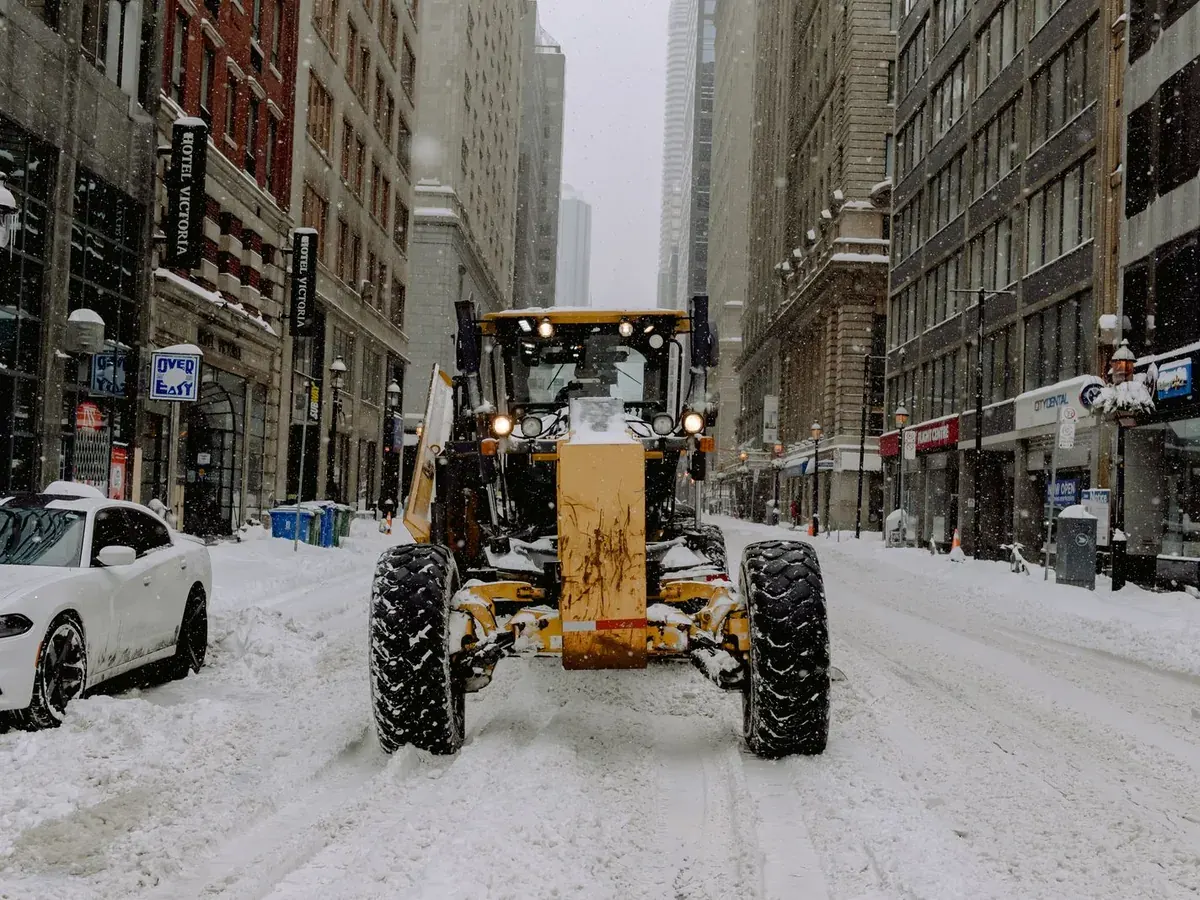
The snow removal equipment behind every promise we make: plow trucks, loaders, box plows, spreaders, and sidewalk machines, winter-ready around the clock.
Heavy-Duty Plow Trucks
The route workhorses: commercial trucks with V-plows and straight blades for lots, drives, and everything between.
Front-End Loaders
Big-site muscle that moves lane-widths of deep snow per pass and stacks it in volumes trucks can’t touch.
Box Plows (Snow Pushers)
10 to 16-foot pushers that carry snow instead of casting it, clearing acres in a fraction of the passes.
Salt & De-Icing Trucks
Calibrated, ground-speed spreaders that lay measured material across lots without stripes or waste.
Skid Steers
Tight-space specialists for loading docks, drive-thrus, garages, and the corners big iron can’t reach.
Sidewalk & Walkway Equipment
Compact machines and hand crews for the surfaces people actually walk on, where the claims are prevented.
Why Snow Removal Equipment Decides Who Survives February
Every contractor sounds identical in September. The difference shows up in February, at 3 a.m., in the third storm of the week, and it’s almost always a snow removal equipment story: the pickup fleet that can’t move drifted lake-effect, the single spreader that broke with no backup, the routes that collapsed because the iron was never sized for the promise. We built our fleet backward from the worst week of a Northeast Ohio winter, because that’s the week clients are actually paying for.

The principle is match, not maximum. A forty-acre distribution center needs loaders with 16-foot box plows; a drive-thru lane needs a skid steer that can turn inside it; a granite plaza needs a walk-behind machine and a hand crew. Snow removal equipment matched to the surface clears faster, damages nothing, and costs the client less per cleared acre than any one-size fleet can.

How the Fleet Maps to the Work
- Plow trucks run the volume: residential routes, commercial lots, and the connective tissue between big sites.
- Loaders and box plows own the acreage: truck courts, intermodal yards, and the burials that stop pickup fleets cold.
- Salt and de-icing trucks run their own dispatch: calibrated application on storm days and refreeze mornings alike.
- Skid steers take the tight geometry: docks, garages, drive-thrus, and cart corridors.
- Sidewalk machines and hand crews finish every visit, because the walking surfaces are where winter actually hurts people.

Winter-Ready Is a Maintenance Habit
Snow removal equipment fails in use or it fails in the shop; there’s no third option in January. Our fleet runs pre-season teardown inspections, in-season maintenance between storms, and staged backups for the components that break at the worst times: cutting edges, hydraulics, and spreader drives. When National Weather Service warnings go up, the fleet is already fueled, mounted, and positioned, because the storm is the exam, not the study session.

For big commercial sites, on-site staging is part of the agreement: loaders and box plows living at the property from December through March, cutting response from hours to minutes. The Commercial Snow Removal page explains the programs, and the Industries directory shows which property types typically stage iron.
Snow Removal Equipment Questions
Why does the equipment matter if the price is the same?
Because the price is only the same until the big storm. Undersized snow removal equipment turns a four-hour clear into a two-day apology, and the missed mornings cost more than any contract spread. Ask every bidder what iron actually backs the promise.
Do you use pickups or heavy trucks?
Both, deliberately. Heavy-duty plow trucks run the commercial and residential routes; loaders and box plows handle acreage and burials; skid steers take the tight spots. The mix is the point, and each property’s plan names the machines assigned to it.
What’s a box plow and why should I care?
A pusher box that carries snow instead of casting it sideways, moving a full lane-width per pass. On big lots it’s the difference between hours and days, and it’s why our loaders wear 16-footers all winter.
Can you stage equipment at our site?
Yes, for commercial properties that need minutes-fast response: loaders and pushers positioned on site December through March. Intermodal yards, DCs, and large campuses use it most, and lake-effect bands are exactly why.
How do you keep spreaders from over-salting?
Ground-speed calibration: the spreader meters material to the truck’s speed, laying an even, measured rate instead of stripes and piles. It protects your concrete and landscaping while cutting material waste, which is covered in depth on Salting & Ice Control.
What happens when a machine breaks mid-storm?
The backup rolls. Critical components are staged, mechanics work through events, and route coverage is planned with failure in mind, because snow removal equipment breaks in use or in the shop, and January doesn’t accept excuses either way.
Is your equipment safe for decorative surfaces?
Yes, by assignment. Polyurethane edges for pavers and deck membranes, rubber edges for stamped concrete, walk-behind machines for plazas. The pre-season walk maps every surface, and the machine list follows the map.
What does the equipment mean for my quote?
Right-sized iron lowers the cost per cleared acre, so honest equipment matching usually makes the quote better, not worse. The Pricing Guide shows how property drivers set the number.
How many trucks does it take to serve a snow route properly?
The honest ratio is what separates real operations from overbooked ones: a plow truck can responsibly carry only as many accounts as it can clear inside the tightest client deadline during a heavy, region-wide storm, not during an average dusting. Contractors who sell capacity against the average winter collapse in the hard one. The right question for any bidder: how many accounts per truck, and what happens to that math when everything gets hit at once?
How does GPS tracking on snow equipment actually work?
Every machine carries a telematics unit reporting position, speed, and activity continuously, and dispatch software turns that stream into the per-visit records clients receive: arrival, departure, zones covered, and route history. It’s the same automatic vehicle location technology transportation departments run on their plow fleets. For clients, it converts “did they come?” from a phone argument into a timestamped map, which is why we log every machine, every visit.
How do you decide which machine serves which property?
The pre-season site walk decides it: pavement acreage, tightest geometry, surface materials, deadlines, and snow storage room get measured, and the machine list falls out of the measurements. Big open acreage draws loaders and pushers, tight corridors draw skid steers, walkway networks draw the compact machines, and most properties get a combination. The plan names the equipment because the property already chose it; we just wrote it down.
How many hours does snow equipment run in a season?
A busy lake-effect winter puts hundreds of engine hours on front-line machines, compressed into perhaps thirty working events, which is a brutal duty cycle: long idle stretches punctuated by all-night maximum-effort runs in the coldest conditions of the year. That cycle is why maintenance discipline matters more in this trade than almost any other. Machines aged in years lie; machines aged in storm hours tell the truth.
Do snow contractors own their equipment or rent it?
Both models exist, and it’s worth asking: owned fleets mean the iron is committed, maintained to the operator’s standard, and available every storm, while rental-dependent operations compete for the same machines everyone else wants in the exact week supply runs out. Seasonal rentals have legitimate uses for surge capacity. But if a bidder’s core promise depends on a rental counter answering the phone in January, that’s a plan with someone else’s name on it.
What does a full snow fleet cost to put on the road?
Adding it up is sobering: heavy trucks with plows and spreaders, six-figure loaders, pushers, skid steers, sidewalk machines, brine rigs, and the shop that keeps them alive represent millions in committed capital before the first flake falls. That number is the real answer to why winter service capacity is scarce and why the good operations sell out early. Clients aren’t buying a truck; they’re renting a slice of an infrastructure stack.
What new technology is changing snow removal?
The visible wave is data: live telematics, pavement sensor networks, storm-modeling forecasts, and routing software that reshuffles fleets as bands shift, all of which we already run in some form. The horizon wave is autonomy, with pilot programs testing self-driving plows on closed sites like airports and campuses. The physics of a blade and a storm won’t change; how precisely the industry aims that blade is changing quickly.
Can a client request specific equipment for their property?
Absolutely, and sophisticated facility managers do: staged loaders written into the agreement, rubber edges specified for a deck, walk-behind-only rules for a plaza, or a dedicated skid steer for the dock line. The plan is a menu we build together at the site walk, and the equipment commitments go into the contract language. If a machine matters to your operation, name it and we’ll commit it.
How long does snow equipment last?
Well-maintained plow trucks serve roughly a decade of winters, loaders and skid steers run long past that on rebuilt components, and attachments live on replaceable wear parts: edges, shoes, and hydraulics that renew each season. The variable is maintenance culture, not the calendar. A fleet’s age matters less than its shop records, which is why ours go through teardown inspection every fall before the season gets a vote.
Is electric snow removal equipment coming?
At the compact end, it’s arriving: electric sidewalk machines and small utility vehicles already work campuses that want quiet, zero-exhaust clearing near buildings, and battery skid steers are entering the market. Heavy trucks and loaders remain diesel for now, because cold-weather battery performance and all-night duty cycles are exactly the hard case for electrification. We watch the segment each season; the walkway fleet will likely electrify first.