Current Conditions: All service areas are currently clear of snow and freezing temperatures.
Sidewalk & Walkway Equipment
The walkway equipment and hand crews behind every safe entrance we clear: compact machines, measured de-icing, and the surfaces people actually walk on.
Walkway Equipment: Where Winter Safety Is Actually Decided
Plows clear the pavement cars drive on; slip claims happen on the pavement people walk on. Every winter injury statistic says the same thing: the sidewalk, the entrance, the steps, and the ramp are where property owners win or lose the season. Our walkway equipment fleet and the crews who run it exist for exactly those surfaces, on every route we serve across Cleveland and Akron.
The machines are sized to the sidewalk, not shrunk from the street. Compact utility machines with blades and brooms run the long walkway networks at HOAs, campuses, and retail frontages, clearing full width without chewing lawn edges. Where a machine’s too big, the snow blowers come out, and where those don’t fit, the shovels do. The surface decides the tool, every time.

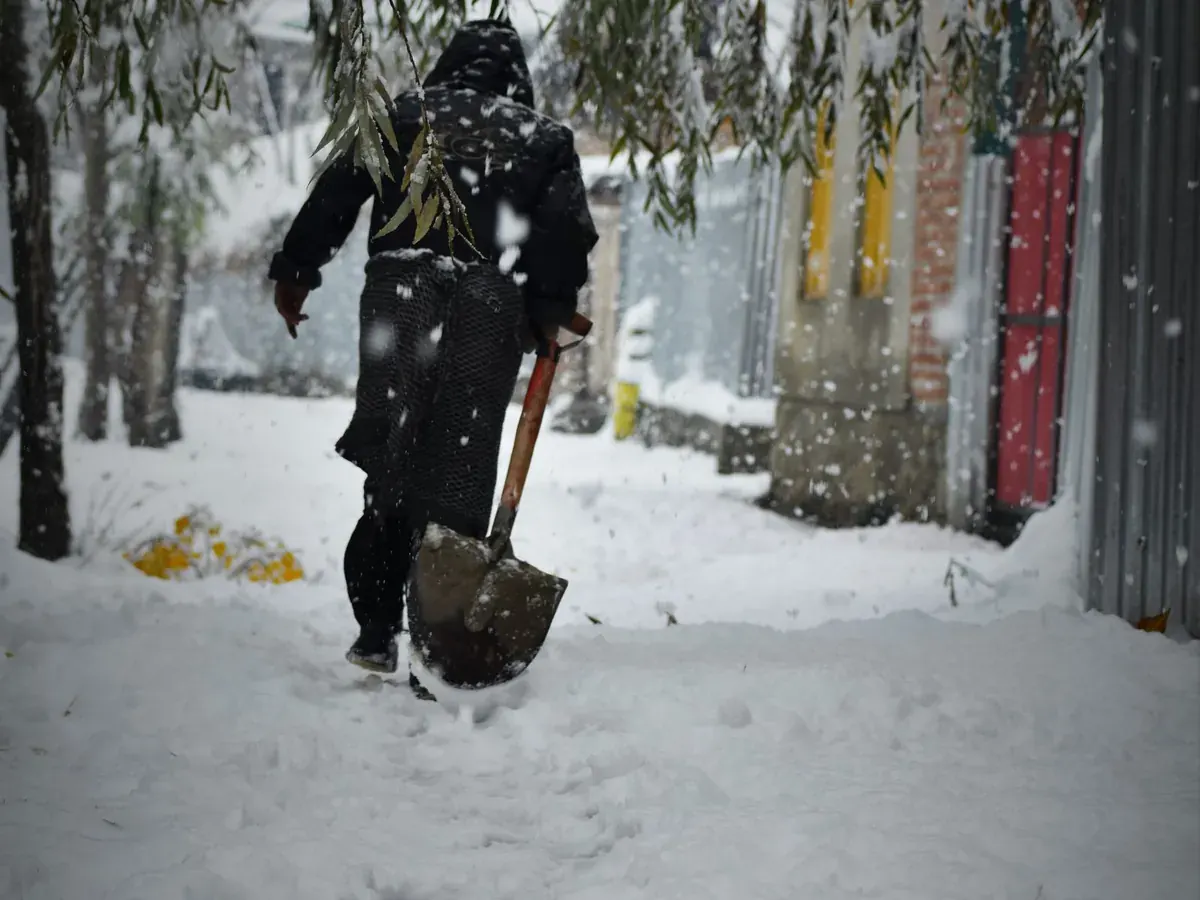
Hand crews are half this fleet, and deliberately so. Steps, stoops, railings’ drip lines, ADA ramps, and door thresholds need human judgment and a shovel edge, not a machine pass that calls close enough good enough. Our walkway equipment teams finish every entrance by hand, because “mostly clear” is a lawsuit’s favorite phrase.

De-icing on pedestrian surfaces is its own chemistry. The crews carry walkway-safe product applied at measured hand rates: enough to keep grip through the refreeze, gentle enough for new concrete, pavers, and the entrances where material tracks inside. The blanket-of-rock-salt approach damages surfaces and still leaves ice at the edges; measured application does neither.

Timing runs on the same discipline as the rest of the fleet: walkway crews follow the plows on every route, so entrances are finished when the property opens, not hours after the lot was done. During ongoing snow and freeze-thaw days, the walkway equipment cycles back, because pedestrian surfaces re-glaze faster than pavement and matter more when they do.
What the Walkway Fleet Covers
- Sidewalk networks: Full-width clearing at HOAs, campuses, and municipal frontages, ordinance deadlines honored.
- Entrances and plazas: The hundred feet where every visitor forms an opinion and every claim begins.
- Steps, stoops, and railings: Hand-finished with drip lines checked, where machines can’t and shortcuts shouldn’t.
- ADA ramps and accessible routes: First priority on every property, cleared and re-treated through the day.
- Crosswalks and cart corridors: The painted paths pedestrians actually follow.
Dispatch is automatic off National Weather Service monitoring, and every walkway pass lands in the same GPS log as the plow work, which is precisely the record a slip claim asks for.
Why the Walkway Crews Matter Most
- Claims Prevention: Pedestrian surfaces generate the injuries; this fleet prevents them.
- Right-Sized Machines: Sidewalk-width equipment that clears full width without collateral damage.
- Hand-Finished Entrances: Steps, ramps, and thresholds done by judgment, not by pass count.
- Surface-Safe De-Icing: Measured rates and gentle products where people and buildings meet.
The walkway equipment works behind the plow trucks on every route, and the material practices are detailed on Salting & Ice Control. The full lineup lives on the Equipment Fleet page.
Walkway Equipment Questions
Why does walkway equipment get its own crews?
Because the walking surfaces are where winter actually hurts people, and a plow can’t reach them. Dedicated walkway equipment and hand crews follow the trucks on every route, so entrances are safe when doors open rather than whenever someone remembers the sidewalk.
Do machines or people clear the sidewalks?
Both, chosen by the surface. Compact machines run the long networks at full width; blowers take the medium spaces; hand crews finish steps, ramps, and entrances. The walkway equipment mix is decided in the pre-season walk, not improvised in the storm.
Are ADA ramps handled differently?
Yes: first in the sequence and re-treated most often. A blocked ramp strands the people with the least ability to improvise around it, so accessible routes lead every property’s walkway plan, with special attention on freeze-thaw days.
What de-icer goes on the walkways?
Walkway-safe product at measured hand rates, matched to the surface: gentler blends on new concrete and pavers, tighter application near entrances where material tracks inside. Grip everywhere, damage nowhere, logged on every visit.
Will the crews come back during the day?
During ongoing snow and refreeze windows, yes. Pedestrian surfaces re-glaze faster than lots, so the walkway equipment cycles back through open hours on commercial accounts, and freeze-thaw afternoons get their own passes.
Do you handle city sidewalk ordinances?
Yes. Cleveland, Akron, and most suburbs require frontage cleared within set hours, and frontage is standard scope on residential and commercial accounts alike. The ordinance letter becomes someone else’s problem, specifically ours.
What about steps and railings?
Hand-finished on every visit, with the railing drip lines checked because that’s where the invisible glaze forms. Steps ice faster than anything flat and injure worse, so they’re crew work, never a drive-by salt toss.
How is walkway work priced?
By footage and finish level, built into each property’s plan rather than billed as an extra. Walkways are half of what winter service is for, and the Pricing Guide shows how the scope sets the number.
What is a dedicated sidewalk machine?
A purpose-built compact utility vehicle, often articulating in the middle for tight turns, sized to a sidewalk’s width and able to swap blades, brooms, blowers, and spreaders on one chassis. Campuses, municipalities, and large HOAs run them because a machine designed for the sidewalk clears it faster and cleaner than anything adapted from a bigger job. They’re the walkway network’s answer to what the plow truck is for the street.
What’s the difference between single-stage and two-stage snow blowers?
A single-stage blower uses one auger to both gather and throw snow, staying light and nimble for a few inches on smooth pavement; a two-stage adds an impeller behind the auger, handling deep, heavy, and drifted snow and throwing it much farther. Crews carry both: single-stage for speed on routine walkway passes, two-stage for the mornings lake-effect made the sidewalks knee-deep. The snow depth picks the machine.
Do power brooms really work on snow?
On light snow, brilliantly: a rotating broom sweeps an inch or two down to genuinely bare pavement, cleaner than any blade can scrape, which cuts the de-icer needed afterward to almost nothing. Brooms lose the fight as depth builds, so they’re the light-event and final-polish tool rather than the storm workhorse. The bare-concrete finish they leave on an entrance plaza is what “cleared” should actually look like.
How do crews spread de-icer on walkways evenly?
With walk-behind and chest-mounted spreaders that meter product at consistent rates, rather than the hand-flung arcs that leave stripes of waste and gaps of ice. Drop spreaders put material only on the walk, keeping it off adjacent turf and beds; rotary units cover wider plazas. Even application is half the reason measured rates work: the right amount only protects if it’s the right amount everywhere.
What kind of shovels do professional crews use?
Purpose-picked ones: wide poly pushers for moving volume down a walk, ergonomic bent-shaft models that spare backs across a long route, steel-edged blades for compacted pack, and plastic edges reserved for pavers, stamped concrete, and stone that steel would scar. A crew’s shovel rack looks oddly specialized because it is. Hand tools finish the surfaces machines can’t, and the finish quality rides on choosing the right one.
Is liquid anti-icing used on sidewalks too?
Increasingly, yes: compact sprayer units lay brine on walkway networks before storms, delivering the same bond-prevention that highway and lot pre-treatment provides, scaled to a sidewalk’s width. Pre-treated walks shovel cleaner, need less granular product after, and track less residue into buildings. It’s a newer practice at the pedestrian scale, and campuses and healthcare sites have been the earliest adopters for exactly the tracking and surface reasons.
Why do sidewalk crews work in pairs?
Efficiency and safety both: one runs the machine or blower while the other handles steps, spreading, and detail, leapfrogging down the route faster than two solo workers could manage separately. At night, in storms, near traffic, a partner is also the safety system, because walkway work happens on foot in the same low-visibility conditions that make the surfaces dangerous in the first place. Pairs finish faster and go home safer.
Will the equipment fit our narrow walkways?
Standard public sidewalks run four to five feet wide, and the compact machines are sized under that; for garden paths, courtyard walks, and anything narrower, the blowers and hand crews take over. The pre-season walk measures the network’s pinch points, gates, bollard gaps, and planter squeezes, so every foot of walkway is assigned a tool that actually fits it before the first storm asks.
Do heated entrance mats actually work?
The plug-in heated mats sold for entrances and steps do melt what lands on them and suit small high-traffic spots like a stoop or a short accessible ramp. Their limits are coverage and cords: they protect only their own footprint, need weather-safe power, and don’t touch the walkway beyond the mat’s edge. As a supplement at a doorway they’re useful; as a substitute for cleared and treated walks they’re a few square feet of false confidence.
How fast can a crew clear a long sidewalk network?
A compact machine clears full-width sidewalk many times faster than shoveling, which is why an HOA’s mile of walks gets done in a machine-hour instead of a crew-day, with hand finishers working entrances in parallel. Production planning runs on those rates: network footage, machine assignments, and hand-detail stops all get timed so the walkway schedule finishes inside the same deadline as the plowing it follows.