Commercial snow work is an equipment business — your fleet determines which contracts you can even bid. Here’s the full commercial snow removal equipment stack, realistic cost ranges, and a sensible buying order for contractors scaling from first truck to full operation.
Plow Trucks: The Core Unit
A 3/4-ton or 1-ton truck with a commercial-grade plow remains the backbone of most operations. Expect $6,000–$14,000 for a quality plow installed on a truck you own; V-plows and expandable wings earn their premium on commercial routes. Our plow brand and type comparison rates every major option with 1–10 scores.
One rule veterans repeat: never run a route without a backup plan. A spare plow, a spare truck, or a mutual-aid deal with another contractor — because equipment fails during storms, not before them.
Skid Steers and Loaders: The Lot Machines
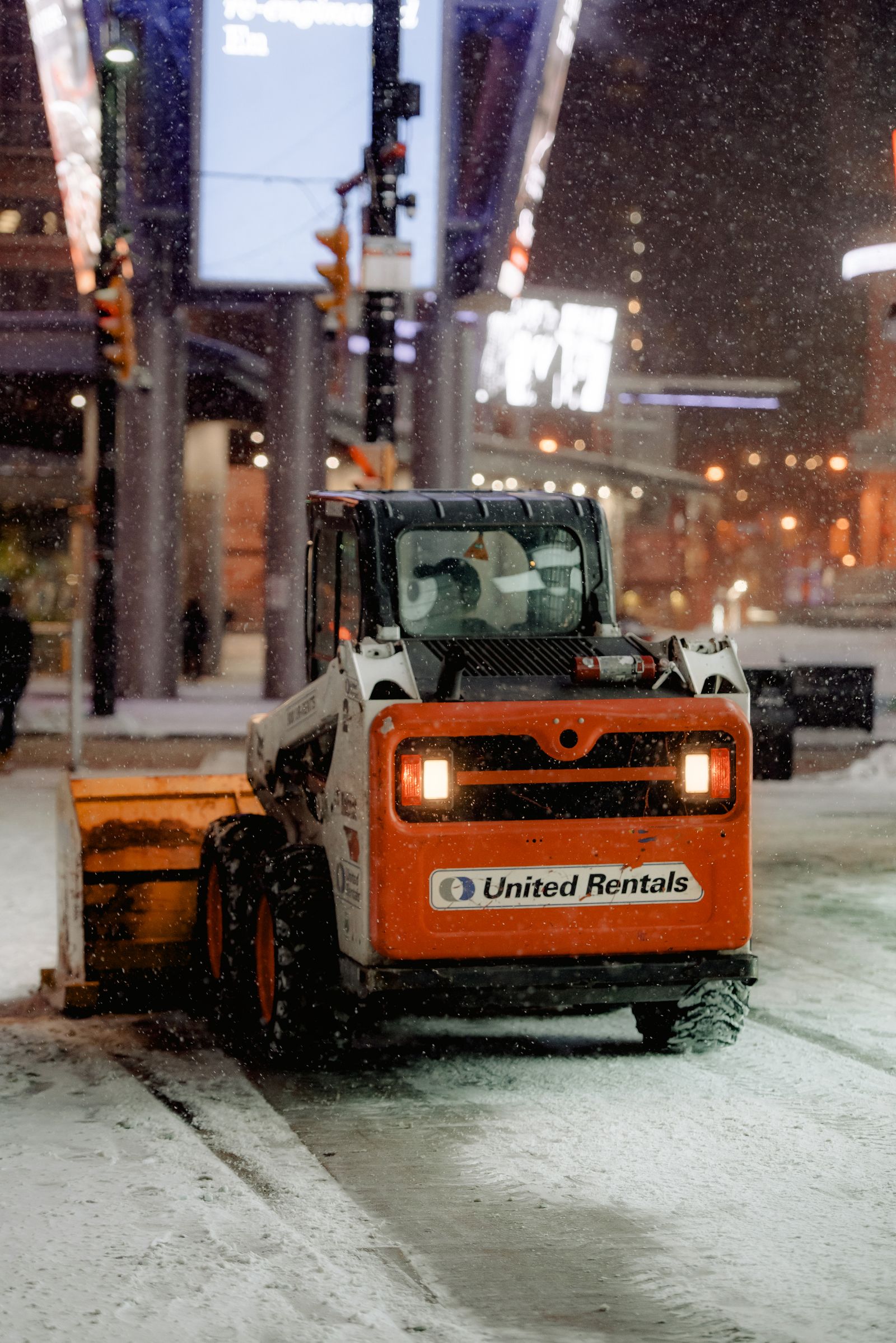
Once you’re servicing multi-acre lots, wheel loaders and skid steers with box pushers out-produce any truck. A skid steer with a 8–10′ pusher handles mid-size lots ($30,000–$60,000 used machine plus $3,000–$7,000 pusher); a wheel loader with a 12–16′ pusher replaces two or three trucks on big sites. Many contractors lease machines seasonally to avoid summer idle costs.
Salt Spreaders and Liquid Systems
Ice management is often the higher-margin half of a commercial account. Tailgate spreaders ($1,500–$4,000) work for small operations; V-box spreaders ($4,000–$9,000) carry the volume commercial routes need. Adding a brine sprayer for pre-treatment cuts salt use up to 30% and wins contracts — property managers increasingly ask for it. Match your material strategy to our ice melt guide.
Sidewalk Crew Gear
Sidewalks are hand-labor territory: commercial two-stage snow blowers ($1,200–$3,500), quality shovels and pushers, walk-behind spreaders, and increasingly, compact stand-on units (like sidewalk-width tractors) for operations with serious walkway contracts. Underestimating sidewalk labor is the most common bidding mistake in commercial work.
The Supporting Cast
GPS tracking on every unit (service verification for liability documentation), spare cutting edges and hydraulic fluid staged before every storm, truck-mounted cameras, stakes for marking lot edges before first snowfall, and reliable 24/7 communication for crews.
Buying Order for a Growing Operation
Stage 1 (residential + small commercial): one truck, straight blade or V-plow, tailgate spreader, two-stage blower. Stage 2 (small lots): second truck with V-plow or wing, V-box spreader, dedicated sidewalk crew gear. Stage 3 (multi-acre contracts): skid steer or loader with pusher, brine system, GPS across the fleet. Stage 4: equipment dedicated per site — the point where loaders live at the mall all winter.
Fill the Routes Before You Fill the Yard
Equipment without contracts is just depreciation. Match fleet growth to signed revenue — and when you’re ready to grow the contract side, our sister company LocalContractorLeads.com generates exclusive commercial snow removal leads to keep new iron busy. See also: how to price commercial work.