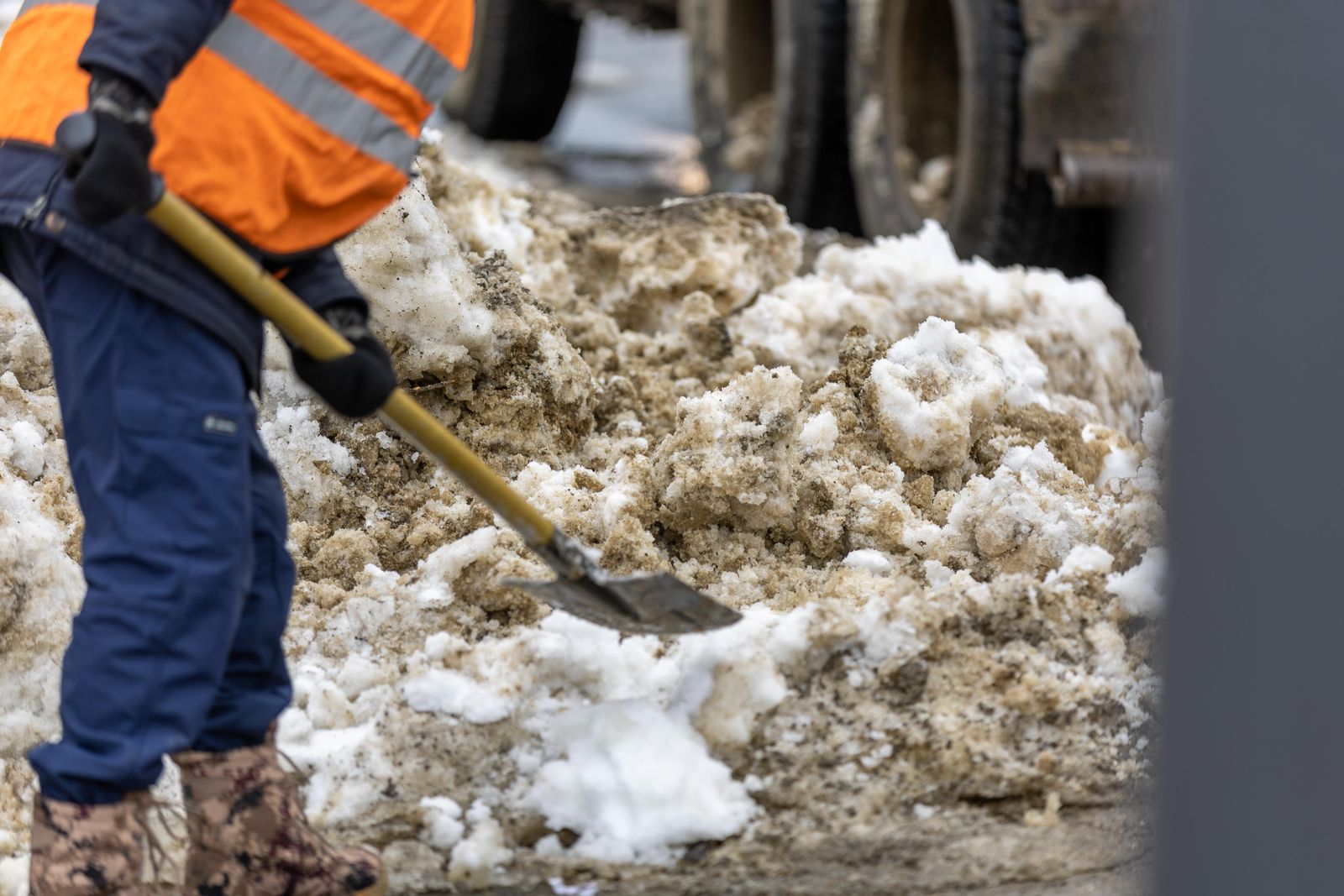
Hire the wrong snow contractor and you’ll find out at 5:45 a.m. on the snowiest Monday of the year, with employees sliding into an uncleared lot and a slip-and-fall claim brewing. Here’s how to choose a commercial snow removal company that actually shows up — a 9-point checklist for property managers, HOA boards, and facility directors.
1. Verify Insurance First — Not Last
Require a current certificate of insurance: general liability (commonly $1M–$2M for commercial work), commercial auto, and workers’ comp. Ask to be named as additional insured. A contractor who hesitates here is disqualified — if they’re uninsured, their liability becomes yours.
2. Ask Where You Sit in Their Route
Every contractor services someone first and someone last. Ask directly: how many accounts per truck, what’s my position, and what’s the guaranteed completion time? A pro answers precisely. “We’ll get to you quick” is not a response time.
3. Check Equipment Depth — and Backup
One truck is one breakdown away from zero trucks. Serious commercial operators run multiple plow units, loaders or skid steers for stacking, dedicated sidewalk crews, and salting equipment — plus a plan for when something fails mid-storm. Ask what happened during the last equipment failure.
4. Look for 24/7 Storm Monitoring
Good contractors don’t wait for your call — they track forecasts, pre-treat before ice events, and deploy on trigger depths automatically. If you have to initiate service, you’re the storm monitor.
5. Demand Documentation
Timestamped service logs, photos, and material records protect you in slip-and-fall litigation — claims can surface months after the storm. Contractors offering GPS-verified service reports are signaling professionalism. More in our snow removal liability guide.
6. Get References From Similar Properties
A great driveway operator may drown on a 3-acre retail lot. Ask for two or three references from properties like yours — same size, same hours, same tolerance for ice — and actually call them. Ask one question: “Did they ever miss a storm?”
7. Understand the Contract Structure
Know who carries weather risk before you sign. Seasonal, per-push, per-inch, and time-and-materials all behave differently in mild vs. brutal winters — our commercial contracts guide breaks down all four, and our pricing guide shows what fair numbers look like.
8. Confirm Ice Management Is Included — and How
Plowing without de-icing is half a service. Confirm trigger conditions for salting, which products go on which surfaces (bulk salt destroys new concrete and pavers), and whether pre-treatment is offered before ice storms.
9. Watch for These Red Flags
Quotes dramatically below every other bid (something’s excluded — or they won’t survive the winter), no physical address or local presence, vague scope (“we clear snow as needed”), demands for full-season payment upfront, and no written contract at all. Any one of these is a warning; two is a no.
The Bottom Line
Price matters, but in commercial snow removal you’re really buying reliability and liability protection. The cheapest contractor who doesn’t show up costs more than the premium one who does. Start vetting in September — by November, the best operators’ routes are full.