Current Conditions: All service areas are currently clear of snow and freezing temperatures.
Trucking Terminals & Freight Yards Snow Removal
Trucking terminal snow removal that keeps cross-docks, driver lots, and fuel islands moving through every Northeast Ohio storm.
Trucking Terminal Snow Removal That Keeps Freight on Schedule
A trucking terminal is a machine for turning trailers, and snow is sand in its gears. Linehaul schedules don’t move for weather, city drivers start their routes at dawn regardless, and a cross-dock that can’t stage freight backs up two states’ worth of network. Our trucking terminal snow removal service keeps LTL terminals, truckload yards, and cross-dock operations across Northeast Ohio turning through the storm.
Terminals live on overnight timing. Linehaul arrives through the night, the dock works it, and city trucks roll before most businesses unlock their doors. That means trucking terminal snow removal has to happen inside the operation’s rhythm, working around live trailer moves at 2 a.m. rather than showing up once at daybreak to plow an empty lot that no longer exists.

Door approaches are the highest-value pavement on the property. A tractor spinning its drives trying to back a pup into door 47 wastes a dock worker, a driver, and the door itself. We scrape door approaches clean and treat them so trailers back straight and land flat, and we time dock-face passes with your dock supervisor so we’re clearing empty doors, not fighting occupied ones.

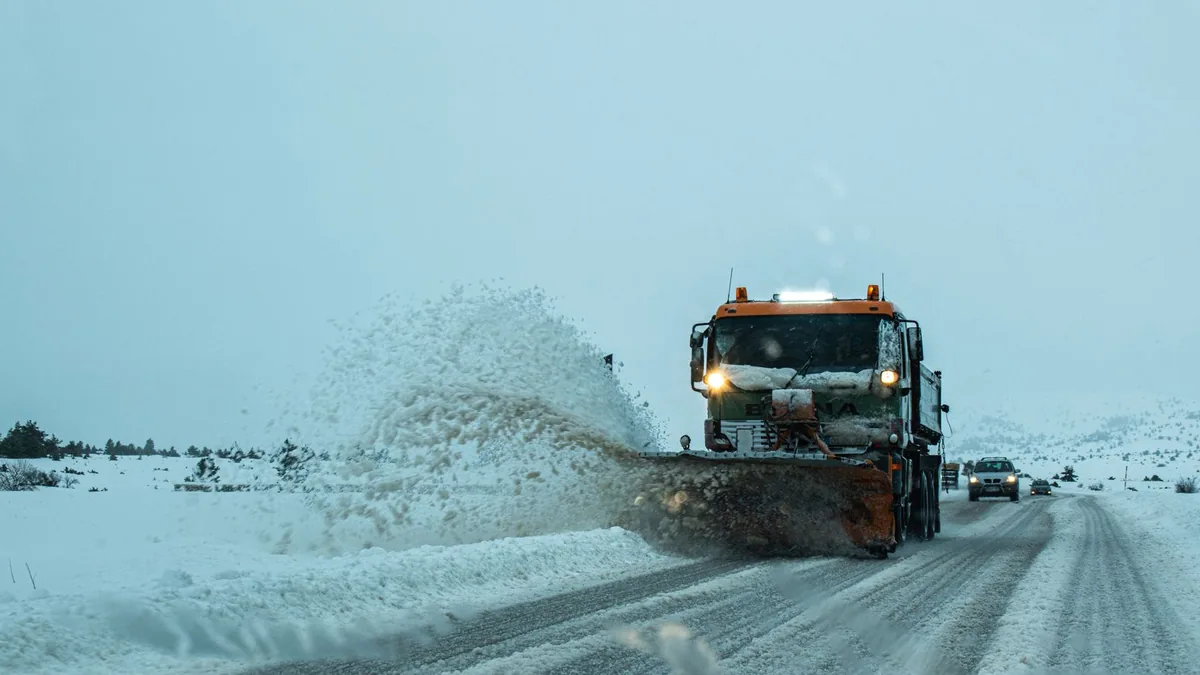
Yard lanes and trailer parking come next. Hostlers moving boxes between the dock and the yard need travel lanes that stay open all storm, and trailer rows need enough clearing that landing gear doesn’t freeze into a berm. Our trucking terminal snow removal crews work the yard in rotation, keeping the whole circulation loop alive instead of perfecting one corner while the rest drifts shut.
Driver parking, the fuel island, and the walk to the driver’s room matter more than they get credit for. Drivers coming off ten hours in the weather deserve a parking spot they can reach and a walkway that won’t put them on their back. Fuel islands ice from spilled diesel and dripping meltwater, so they get scraped and treated as their own zone on every visit.

Scale approaches and the gate shack round out the zone list. A scale lane with packed snow reads wrong and queues trucks; a gate shack the guard can’t safely reach is a security problem. Trucking terminal snow removal covers those corners because terminal managers shouldn’t have to list them; they should just be done.
Our Trucking Terminal Snow Removal Process
Freight runs on process discipline, and our trucking terminal snow removal service is built the same way.
- Terminal walk: We map doors, yard lanes, trailer rows, driver parking, fuel islands, scales, and stacking zones with your terminal manager before the season.
- Schedule integration: Linehaul windows, city dispatch time, and dock shifts go into the routing so service happens inside your rhythm.
- Storm monitoring: We track National Weather Service forecasts around the clock and dispatch ahead of your inbound bank.
- Zone rotation: Door approaches and yard lanes continuously, coordinated with dock and hostler activity; driver areas and fuel island every cycle.
- Documentation: Every trucking terminal snow removal visit closes with GPS-stamped logs of times, zones, and materials.
During multi-day events, crews rotate so coverage never lapses. The freight doesn’t stop for lake-effect, and neither does the service plan.
Trucking Terminal Snow Removal Across Cleveland and Akron
Northeast Ohio sits at the crossroads of I-80, I-77, I-71, and I-76, which is why every national LTL carrier and countless truckload fleets run terminals here. We provide trucking terminal snow removal across the Cleveland and Akron metro, from 30-door city terminals to major break-bulk operations, with equipment scaled to the yard.
The lake-effect belt is hard on freight schedules. A band can drop six inches during one dock shift, and the terminals that keep their linehaul on time are the ones with committed winter response rather than a contractor who arrives after his other twelve lots. Terminal accounts get priority dispatch when bands set up, because we know what a missed linehaul window costs.
Choosing a Trucking Terminal Snow Removal Contractor
Terminal managers have fired enough snow contractors to know the failure modes. Before signing a trucking terminal snow removal agreement, ask these questions.
- Overnight capability: Will they work inside your linehaul window, around live hostler moves, or only show up at dawn?
- Door-approach standard: Do they scrape approaches clean so trailers back straight, or leave packed snow that spins drive tires?
- Yard awareness: Do operators know how to work around hostlers, trailer rows, and blind spots?
- Equipment scale: Loaders and box plows for acres of yard, or pickups that push the same snow all night?
- Records: GPS logs by zone after every event, usable when a driver injury claim lands?
A contractor who’s never worked a live freight yard learns on your linehaul schedule. The tuition comes out of your service metrics.
What Trucking Terminal Snow Removal Costs
Trucking terminal snow removal pricing follows yard acreage, door count, driver-area footage, and coverage hours. A 24-hour break-bulk pays more than a day-shift city terminal because it gets continuous storm coverage, and the quote says so plainly.
Most terminals run seasonal agreements so the winter number is fixed and the response is committed before the storm. The Pricing Guide lays out seasonal and per-event structures side by side.
Protecting Drivers, Freight, and the Terminal
Every trucking terminal snow removal visit is GPS-logged with times, zones serviced, and materials applied. Driver slip claims are among the most common winter losses in freight, and the documented service history is what your claims team needs. The same record shows corporate the yard was maintained when the service metrics get reviewed.
If your terminal needs a winter partner that understands linehaul windows, call 1-866-426-5222. We’ll walk the yard with your terminal manager and quote a trucking terminal snow removal plan before the freeze.
Why Freight Operations Choose Local Snow Removal
- Linehaul-Window Service: Crews work overnight inside your operation’s rhythm, not after it.
- Door-Approach Standard: Approaches scraped clean and treated so trailers back straight and land flat.
- Yard-Scale Equipment: Loaders and box plows that open acres of yard in passes, not shifts.
- Claims-Ready Records: GPS logs by zone after every event, from door faces to the fuel island.
See the full program on our Commercial Snow Removal page. Related operations: Warehouse Snow Removal for distribution buildings and Intermodal Snow Removal for container ramps.
Trucking Terminal Snow Removal Questions
Can you clear the yard while the dock is working?
Yes, and that’s the normal case. Trucking terminal snow removal crews coordinate with your dock supervisor and hostlers, clearing empty door runs and open yard lanes in rotation while trailer moves continue. Our machines yield to yard equipment as a standing rule.
Will door approaches be clean enough to back trailers straight?
That’s the standard we’re hired on. Approaches get scraped to pavement and treated so drive tires grip and trailers land flat. Packed snow at the dock face wastes a driver, a door, and a dock worker every time a set has to be re-backed, so it doesn’t stay.
Can you work around our linehaul schedule?
Your inbound and outbound windows go into the routing plan, so heavy clearing happens between banks and door faces are ready before the linehaul lands. Trucking terminal snow removal that ignores the schedule just relocates the problem.
How do you handle trailer rows and landing gear?
Travel lanes between rows get plowed with standoff from landing gear and tires, at reduced speed, with cleanup passes after rows turn. We don’t windrow against parked trailers, because frozen berms under landing gear cost hostlers time on every pull.
Do you treat the fuel island separately?
Yes. Fuel islands ice differently, with spilled diesel and meltwater refreezing under the canopy, so they’re scraped and treated as their own zone on every trucking terminal snow removal visit. Drivers fueling at 3 a.m. get pavement that holds.
What about driver parking and the driver’s room walk?
Cleared and treated every cycle. Drivers coming off long shifts in bad weather shouldn’t finish the day with a fall in your lot, and driver slip claims are among the most common winter losses in freight. That walkway is a priority zone, not an afterthought.
Can you keep the scale lanes and gate open?
Yes. Scale approaches get scraped so packed snow doesn’t queue trucks, and the gate shack approach stays clear for your guard staff. Those corners are in the zone plan from the pre-season walk, so nobody has to remember to ask.
What happens during a multi-day lake-effect event?
Rotating crews and continuous coverage. Terminals run through lake-effect, so trucking terminal snow removal runs through it too, cycling doors, yard lanes, and driver areas until the event ends. Priority dispatch applies when bands set up over freight corridors.
What reporting does the terminal receive?
GPS-stamped logs by zone: arrival times, work completed, and material volumes after every event. When a claim lands or corporate reviews the winter, your terminal manager has the paper in hand.
How is trucking terminal snow removal priced?
By yard acreage, door count, driver-area footage, and coverage hours, usually as a seasonal agreement with committed response. Day-shift city terminals can run per-event. The Pricing Guide explains both structures.
What is a cross-dock terminal and why does snow hit it hard?
A cross-dock terminal is a freight building where shipments move directly from inbound trailers to outbound trailers with little or no storage, which means the building only earns money while doors keep cycling. Snow hits cross-docks harder than warehouses because there’s no inventory buffer: a blocked door approach doesn’t delay a putaway, it delays tonight’s outbound linehaul and every delivery riding on it. That’s why cross-dock winter plans run continuous door-face service instead of scheduled visits.
What is the difference between linehaul and city delivery in winter?
Linehaul is the overnight terminal-to-terminal leg that runs on fixed departure windows, while city delivery, or P&D, is the daytime pickup-and-delivery work that fans out from the terminal each morning. Winter service maps to both clocks: door approaches and yard lanes must be ready before linehaul banks arrive and depart overnight, and the city fleet’s staging rows and exit lanes must be clear before the morning dispatch wave rolls.
How does snow affect LTL delivery times?
Snow stretches LTL delivery times at three points: linehaul legs slow on highways, dock operations slow when door approaches pack with snow, and city routes lose stops per hour on residential streets. Terminals can’t control the highways, but the middle link is entirely controllable: a terminal whose doors, yard, and dispatch lanes stay clear through the storm protects its service metrics while competitors’ freight sits an extra day on the dock.
Why do semi trucks get stuck at loading docks in winter?
Tractors get stuck at docks because backing under load demands maximum drive-tire traction at exactly the spot where packed snow, spilled trailer ice, and shaded pavement conspire against it. The dock approach’s slight downgrade toward the building compounds it: a trailer eases down easily and then the empty tractor can’t climb back out. Scraped-to-pavement approaches with grip-focused treatment prevent the whole cycle, which beats towing a tractor off a live door at 4 a.m.
Who is liable when a truck driver slips at a freight terminal?
Liability typically involves both tracks: the driver’s employer covers workers’ compensation, while the terminal owner faces premises liability exposure if the surface wasn’t reasonably maintained, and outside carriers’ drivers make that exposure very real at busy terminals. The terminal’s defense is documented winter maintenance: written service standards and per-visit GPS logs showing the yard, walks, and driver areas were treated. Terminals with clean records settle nuisance claims; terminals without them fund them.
How do you de-ice a truck scale without damaging it?
Carefully, and mostly around it rather than on it: scale approaches and exit lanes get scraped and treated so trucks arrive at the platform straight and slow, while the platform itself gets minimal chemical and no plowing that could catch the deck edges or force slush into the pit where load cells live. Flooding a scale pit with brine-laden melt is an expensive calibration problem, so the platform’s own drainage stays clear on every winter visit.
What is a yard jockey and why do plow crews coordinate with them?
A yard jockey, also called a hostler or spotter, is the driver who shuttles trailers between dock doors and yard rows all shift in a purpose-built tractor, and they own the yard’s traffic rhythm. Plow crews coordinate with them because both are working the same lanes at the same time: our machines yield to jockeys as a standing rule, clear the rows they’ve emptied, and stay off the doors they’re about to hit. The choreography is radio-simple once both sides run it nightly.
Do trucking companies plow their own yards or hire contractors?
Most hire contractors, because terminal-scale winter response needs loaders, box plows, and overnight crews that make no economic sense to own for one yard, and terminal maintenance staff are stretched thin already. Some large fleets keep a yard tractor with a blade for touch-ups between contractor passes, which works well as a hybrid. The failure mode is relying on that single blade for lake-effect events it was never sized to handle.
What causes black ice in truck yards?
Truck yards manufacture their own black ice: tires compress fresh snow into a polished film within hours, idling tractors drip warm condensation that freezes into glaze patches, and diesel-slicked fuel island pavement freezes slicker than plain ice. The film hides against black asphalt, especially under yard lights, which is why yard ice control runs on temperature triggers and known trouble spots rather than waiting for snowfall to justify a visit.
How wide do yard lanes need to stay for tractor-trailers in winter?
Wide enough to preserve the turning geometry the yard was striped for: a tractor-trailer’s swept path through a corner is dramatically wider than the tractor itself, and snow piles at lane corners are what quietly shrink a workable yard into a fender-bender factory. Winter yard discipline keeps piles off corner radii and out of the backing lanes behind trailer rows, holding the full designed width through the season instead of letting January negotiate it away.