Local Snow Removal

Front-End Loaders

Current Conditions: All service areas are currently clear of snow and freezing temperatures.

HomeEquipment FleetFront-end loaders
Heavy Equipment Fleet

Front-End Loaders Snow Operations

Front-end loaders with 16-foot box plows: the machines that open acres in passes, stack snow by the ton, and win the storms that stop pickup fleets.

Front-End Loaders: The Difference Between Hours and Days

Every serious snow fleet has a moment when trucks aren’t enough. The lot is forty acres, the lake dropped two feet overnight, or the piles have grown past anything a plow can push. That’s the moment front-end loaders were built for, and it’s why ours anchor every large commercial account we run across Cleveland and Akron.

The math is simple and unforgiving. A pickup plow moves an eight-foot bite and casts it sideways; front-end loaders with 16-foot box plows carry a full lane-width of deep snow in one pass and put it exactly where the site plan says. On big pavement, that’s the difference between a lot open for the morning shift and a lot open by Thursday.

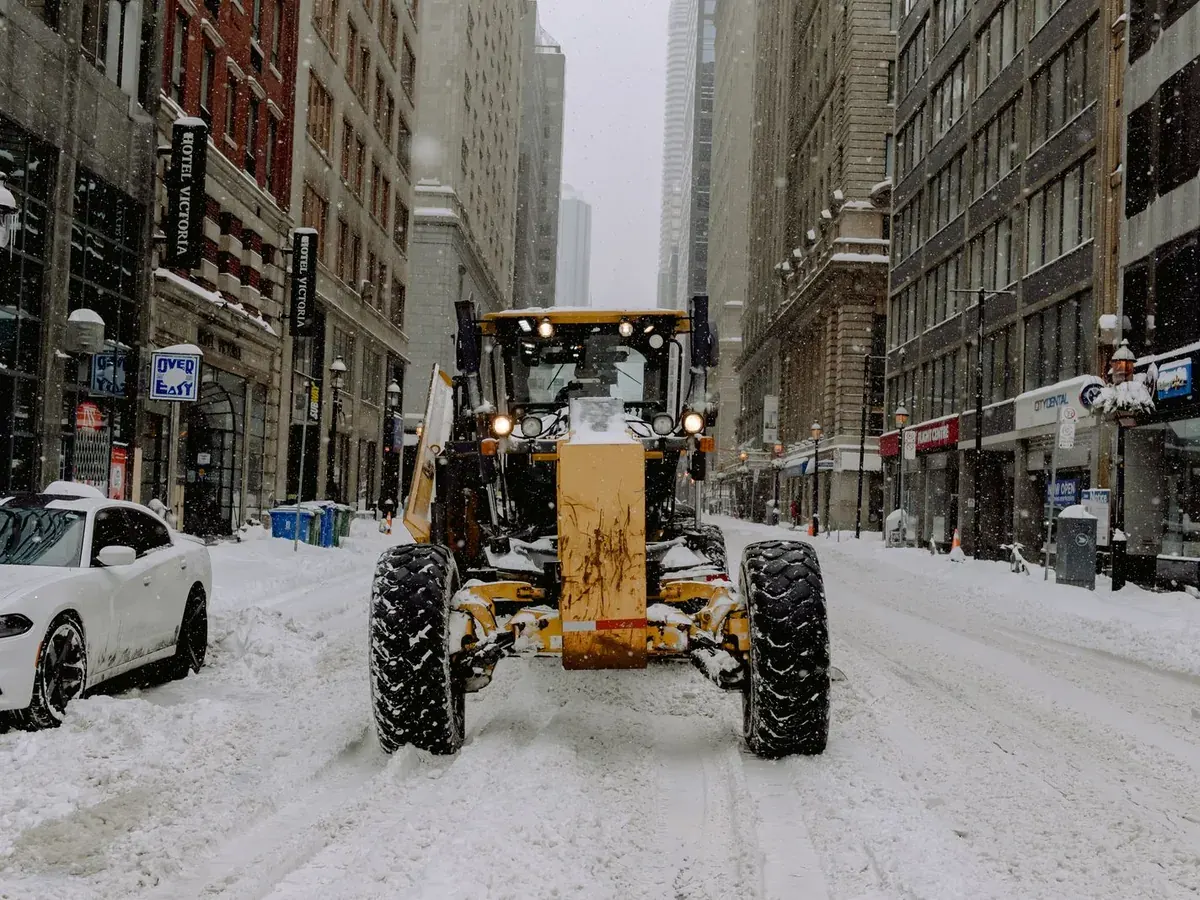
Front end loader snow removal with a 16-foot box plow on a commercial lot

Stacking is the second superpower. Snow on a commercial property has to go somewhere, and by February the somewhere is usually full. Front-end loaders stack piles high and tight instead of long and sprawling, which preserves parking capacity all season and keeps sightlines open at the corners where piles cause accidents.

High-volume snow stacking during front end loader snow removal

When even stacking runs out of room, the same machines flip to haul-off duty: loading trucks at a pace no other equipment matches, resetting a buried lot to full capacity in a day. Loader-fed haul-off is how the region’s biggest properties get their February back, and it’s quoted by volume before the trucks roll.

Loader filling trucks for haul-off during front end loader snow removal

For the properties that need response in minutes instead of hours, we stage loaders on site from December through March: intermodal yards, distribution centers, and campuses where a lake-effect band can’t be answered from across town. The machine sits where the ops manager wants it, fueled and mounted, and the storm response starts the moment the trigger hits.

Where Front-End Loaders Earn Their Keep

  1. Truck courts and dock aprons: Lane-widths cleared per pass so carriers stay on appointment. See Warehouse Snow Removal.
  2. Intermodal and freight yards: Dozens of acres opened in hours, with machines that yield to yard equipment. See Intermodal Snow Removal.
  3. Big retail and campus lots: Capacity preserved through the season with tight, high stacking.
  4. Storm digouts: The emergency calls where two feet of lake-effect stopped everything smaller.
  5. Haul-off operations: Loading out the piles when the site plan runs out of corners.

Operator skill is what makes the iron safe. Our loader operators run the same sites all winter, learn the clearances, and work to National Weather Service-triggered dispatch like the rest of the fleet, with spotters where geometry gets tight.

Why Big Properties Ask for the Loaders

  • Lane-Width Passes: 16-foot box plows that clear acreage in a fraction of the time.
  • High-Volume Stacking: Piles built tall and tight, protecting parking and sightlines.
  • Haul-Off Speed: Truck-loading pace that resets a buried lot in a day.
  • On-Site Staging: Machines living at your property December through March.

See the rest of the fleet on the Equipment Fleet page, including the box plows these machines wear and the skid steers that finish the tight corners behind them.


Front-End Loader Questions

Does my property need loader service?

If your pavement runs past a few acres, your docks can’t wait, or your piles eat parking by January, yes. Smaller properties are better served by our plow trucks at lower cost, and we’ll tell you honestly which side of the line your site falls on.

How much snow can a loader move per pass?

A 16-foot box plow carries a full lane-width of deep snow, roughly three to four times a pickup plow’s bite, without casting it into windrows that need re-handling. Multiply that over forty acres and the difference is measured in shifts, not minutes.

Can loaders work while our site is operating?

Yes, with the same discipline our industrial accounts run everywhere: your equipment always has right of way, moves are coordinated with your ops contact, and the same operators return all season so the site’s rhythm becomes habit.

Do you stage loaders on site all winter?

For large commercial accounts, yes: positioned where your team wants them from December through March, fueled and mounted. When lake-effect bands set up, response starts in minutes because the machine never left.

Will a loader damage our pavement?

Not run properly. Box plows ride on shoes and edges matched to the surface, operators are trained on approach angles, and the pre-season walk documents every joint and drain worth protecting. Damage stories come from rented machines and rookie operators, not from crews who work the same sites all winter.

How does loader haul-off pricing work?

By volume and distance, quoted before the trucks roll. One mid-season haul-off typically costs less than losing a fifth of your parking until April, which is the honest comparison to run. The Pricing Guide covers the structures.

Can a loader dig out a property after a huge storm?

That’s the classic emergency call, and yes. Two feet of lake-effect that stops pickup fleets is normal work for a loader with a box plow. Buried lots come back in hours, with haul-off available when there’s nowhere left to stack.

Are the loaders part of a regular contract or an add-on?

Part of the plan wherever the property needs them. Large-site seasonal agreements include loader service and staging in the base scope; smaller properties can call on the loaders for digouts and haul-off as needed.

What size loader is best for snow removal?

Mid-size wheel loaders in the 2.5 to 4 cubic yard class are the workhorses of commercial snow: big enough to push a 14 to 16 foot box plow and stack high, nimble enough to work between parked trailers and light poles. Compact loaders shine on tighter sites; the giant quarry-class machines rarely pencil out on pavement. The right answer is matching machine width and weight to the site’s geometry, which is what the pre-season walk decides.

How much does a wheel loader cost?

New mid-size wheel loaders commonly run well into six figures before the snow-specific attachments, plus insurance, maintenance, fuel, and an operator who knows what they’re doing at 3 a.m. That capital math is why most properties contract loader-class service instead of owning it: the contract buys the output of the machine for the weeks it’s needed without owning the asset for the fifty weeks it isn’t.

Do loaders need special tires or chains for snow?

Traction is managed with tire choice and technique more than chains: snow-rated radial tires with open tread patterns handle most commercial pavement well, and chains, where used, are reserved for steep grades and extreme ice because they’re harder on the pavement being protected. Ballast and operating technique do the rest. A properly shod loader keeps pushing in conditions that have pickup trucks spinning in place.

How fast can a loader get to a site?

Wheel loaders road at roughly 20 to 25 mph, which makes cross-town repositioning slow and mid-storm repositioning slower, and that speed limit is the entire argument for on-site staging. A staged machine responds in minutes; a roading machine measures response in hours it spends crawling down Route 8. Large accounts get staged loaders precisely so the storm never gets a head start the machine can’t recover.

How do loader operators see at night in a storm?

Modern machines carry full LED work light packages front and rear, and ours add backup cameras and spotters wherever geometry tightens near buildings, trailers, or pedestrian areas. The bigger safety factor is familiarity: operators who run the same site all winter know where every island, bollard, and dock leveler sits before the snow hides it. Night whiteout work is where site-dedicated operators prove their value.

Do the loaders handle salt too?

Yes, in the supporting role: at the yard, loaders charge the salt trucks from the bulk pile between routes, and on large sites a staged loader keeps the on-site spreader loaded through long events. It’s unglamorous work that keeps the ice-control side of the operation moving at storm pace, and it’s one more reason the machine staged at your site earns its parking spot.

Is a backhoe as good as a wheel loader for snow?

A backhoe can push a smaller pusher box and works fine on modest sites, but it gives up bucket capacity, lift height, visibility, and cycle speed to a true wheel loader, which is why serious snow operations standardize on loaders for big pavement. Where backhoes win is versatility for contractors who need one machine year-round. For clearing forty acres before a 6 a.m. shift, the wheel loader isn’t a preference; it’s the requirement.

How high can a loader stack snow?

A mid-size wheel loader stacks 12 to 16 feet comfortably, and high-lift configurations go higher, which matters because pile height is pile footprint: snow stacked twice as tall consumes half the parking. Tall, tight, vertical-sided piles are the visible signature of loader work versus truck plowing, and they’re why loader-serviced lots still have their corner stalls in March while truck-only lots gave them up in January.

What attachments do loaders run besides box plows?

The quick-coupler makes the loader a platform: box pushers for open runs, angle plows for windrow work, general buckets for stacking and truck loading, and high-capacity snow buckets for haul-off duty. Some fleets add loader-mounted blowers for casting into trucks in dense urban work. Ours run box plows and buckets as the core pairing, swapping in minutes as the storm’s job changes from pushing to stacking to loading.

Do loader operators need special licenses or training?

Off-road operation on private property doesn’t require a CDL, but professional operations train and document anyway: equipment-specific operator training, site orientations for each property’s hazards, and the seasonal repetition that turns a site’s geometry into muscle memory. When a machine that weighs as much as ten cars works around pedestrians and parked trailers at night, the operator’s preparation is the real safety system; the machine is just the tool.