Summit County, Ohio
Snow removal in Summit County, Ohio
Professional, reliable, rapid snow and ice management for residential and commercial properties throughout Summit County.
One field to start. No account, no sales call — we come back with a real number.
Akron-Canton Airport, in the city of Green at the south end of Summit County, averages 47.2″ of snow a year. In the ten years from 2014 through 2023 it measured as much as 55.2″ and as little as 16.0″ — a three-and-a-half-fold swing between one winter and another in the same place.
The north end of the county is a different story again. Twinsburg, Macedonia, Northfield and Hudson sit closer to the lake and regularly take more snow than Akron from the same storm, so we plan and price the two ends of Summit County separately.
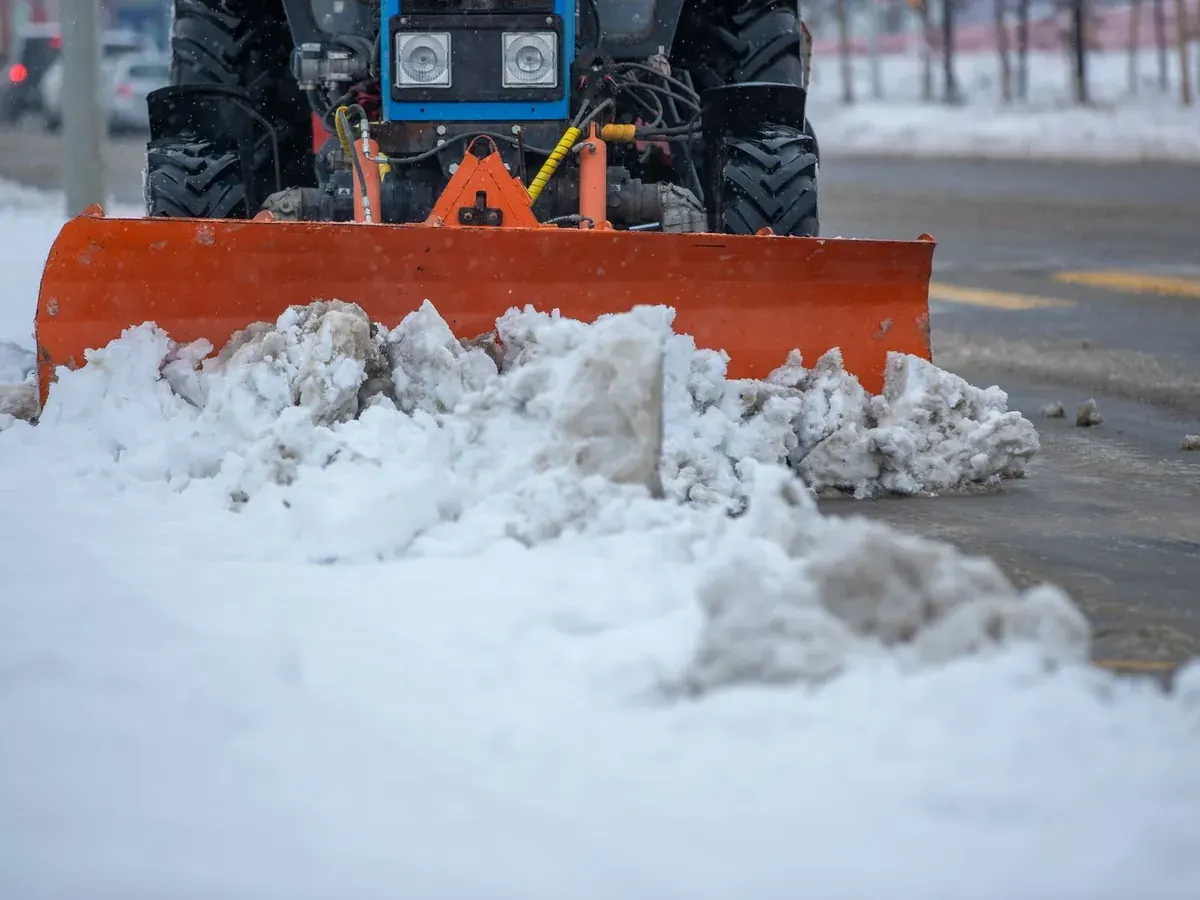
Services available in Summit County
A complete suite of winter management services designed to keep the county moving.
Residential removal
Keep your driveway and walkways clear all winter long.
Commercial removal
Ensure your business remains open and safe for customers.
Salting & ice control
Prevent slips and falls with our proactive salting services.
Emergency service
24/7 rapid response for severe winter storms and blizzards.
Seasonal contracts
One fixed number for unlimited visits, all winter.
Specialty properties
24 industry-specific programs, warehouses to churches.
About Summit County
Summit County was formed on March 3, 1840, from parts of Medina, Portage and Stark counties. It is named for the highest point on the Ohio and Erie Canal, which crossed the divide at Akron — a city whose own name comes from the Greek for a high place. Akron is the county seat and largest city.
The canal made Akron a town and rubber made it a city: Goodyear, Firestone, B.F. Goodrich and General Tire were all founded here. Today about 538,000 people live in the county’s 413 square miles, making it the fourth most populous in Ohio.
History, attractions & landmarks
The largest part of Cuyahoga Valley National Park lies in northern Summit County, along with the Boston Mills and Brandywine ski areas and Blossom Music Center in Cuyahoga Falls. Akron is home to Stan Hywet Hall and Gardens, the Akron Art Museum, the Akron Zoo, the University of Akron and Derby Downs, where the All-American Soap Box Derby is run.
Hale Farm and Village in Bath, downtown Hudson and the Summit Metro Parks trail system round out the list. For a plow crew, the landmarks that matter most are the hills: Akron’s valleys and the grades around the national park dictate which streets and drives get treated first.
Summit County by the numbers
A snapshot from the latest U.S. Census and public data.
More than 230,000 households, a dense urban core, and commercial corridors in Fairlawn, Montrose, Stow and Macedonia make Summit one of the largest markets we serve. Two-thirds of homes are owner-occupied, and many of Akron’s older neighbourhoods have narrow shared drives and on-street parking that call for smaller equipment.
Neighborhoods we serve
We clear driveways, sidewalks and lots across all of them.
Area codes & ZIP codes we cover
Summit County is served by area code 330, with 234 as an overlay. Our coverage spans every ZIP code in the county.
Measured, not estimated
No two winters here are the same
This is the number that should decide how you buy snow removal in Summit County — and it is the number most quotes never show you.
Annual snowfall at Akron-Canton Airport, 2014–2023
Where the snow falls across a season
Average inches by month, 1991–2020 normals — 47.2″ across the season.
What the spread means for your contract
A 3.5× spread is the whole argument for a seasonal plan. Per push, a 55.2″ winter costs you roughly 3.5 times what a 16″ winter does, and you find out which one you bought in February. A seasonal number is the same either way — you are buying the average and we carry the variance.
Per push wins in a mild winter, and we will tell you so: if you can absorb a variable line and you are not on a steep drive, it is the cheaper bet more often than not. What it is not, is predictable.
See the figures as tables
| YEAR | INCHES | CM |
|---|---|---|
| 2023 | 16.0″ | 41 cm |
| 2022 | 54.0″ | 137 cm |
| 2021 | 32.5″ | 83 cm |
| 2020 | 42.6″ | 108 cm |
| 2019 | 41.3″ | 105 cm |
| 2018 | 47.2″ | 120 cm |
| 2017 | 41.7″ | 106 cm |
| 2016 | 39.6″ | 101 cm |
| 2015 | 51.5″ | 131 cm |
| 2014 | 55.2″ | 140 cm |
| MONTH | AVG | SNOW DAYS |
|---|---|---|
| October | 0.3″ | 0.4 |
| November | 3.3″ | 3.4 |
| December | 8.9″ | 9.5 |
| January | 13.4″ | 13.3 |
| February | 12.0″ | 10.0 |
| March | 7.6″ | 6.7 |
| April | 1.7″ | 2.0 |
| Season | 47.2″ | 45.3 |
Two different measures, deliberately kept apart: the yearly figures are published annual totals for the airport station, and the monthly figures are the 1991–2020 normals. They rest on different periods and bases, so the ten-year average above is not comparable to the 47.2″ seasonal normal — treating them as one series would invent a trend that is not in the data. Source: NOAA (ACIS station records and NCEI 1991–2020 climate normals).
The snow belt, in numbers
Your street, not your metro
Akron-Canton Airport averages 47.2″ a year; Cleveland Hopkins, forty miles north, averages 63.8″. Summit County runs between those two numbers from south to north. A Twinsburg or Macedonia address is buying something much closer to a Cleveland winter than a Green or New Franklin address is, and a single county-wide price would overcharge one of them.
Average annual snowfall across Ohio
Average annual snowfall, 1991–2020 normals from the US National Centers for Environmental Information. Source →
Local winter challenges
Summit County’s winter is a matter of north versus south and hilltop versus valley. The northern suburbs catch the tail of Lake Erie’s snow bands; Akron and the southern lakes area see less snow but more freeze-thaw. The Cuyahoga valley cuts hundreds of feet through the middle of the county, so Merriman Valley, Peninsula and the hills of West Akron ice early and stay iced. Older Akron streets are tight, with cars parked both sides, which makes equipment choice and timing as important as horsepower.
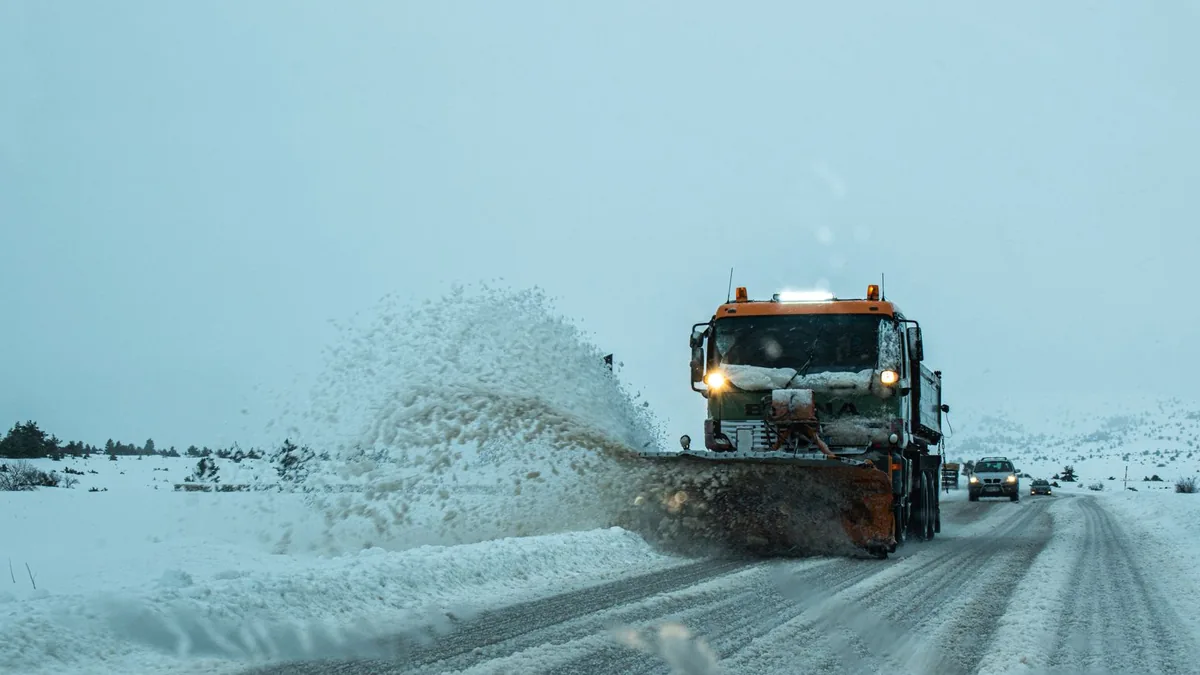
What snow removal costs here
Pricing varies with the size of the property, the type of service and the specific location. For residential properties, a standard two-car driveway typically ranges from $45 to $75 per push depending on snow depth. Seasonal contracts generally start around $400 to $800 for the season.
Commercial pricing is highly customized. A small retail lot in Fairlawn or Stow might run $150 per push, while a distribution center, plant or medical campus that needs dedicated on-site equipment is priced through a full seasonal management contract. Full structures are in the pricing guide.
Get the number for your address
Ranges only get you close. We measure the drive on the map, check it against this season’s routes, and come back with an itemized figure — usually the same day.
Who clears what
The rules where you live
Ohio has no statewide shoveling law, so the rule depends on which side of a municipal line you are on. The pattern is consistent, though: the city or township plows the street, and everything between the street and your front door is yours — including the berm the plow leaves across your apron and, in most incorporated places, the public sidewalk in front of the property.
And the liability question
On the liability question, Ohio is not what most people assume: the Ohio Supreme Court has held that property owners are generally not liable when someone slips on natural accumulation on a public sidewalk, even where a municipal ordinance requires them to clear it. That is general information rather than legal advice, and we are not attorneys — it also does not carry over to commercial premises, where the duty owed to invitees is a different question entirely and where the visit documentation in a commercial contract does real work. If a specific claim is in play, ask a lawyer, not a plow contractor.
Property owners must clear sidewalks of snow, ice and debris within 24 hours (Code of Ordinances section 98.01).
source →Residents may not shovel, push or pile snow onto sidewalks, aprons or streets, or build snow barriers that block pedestrians or vehicles.
source →Owners of commercial or business property must clear sidewalks within a reasonable time, generally not more than 24 hours after the storm.
source →Cities we serve in Summit County
Local resources
Summit County snow removal questions
Do the northern suburbs really get more snow than Akron?
Yes. Twinsburg, Macedonia, Northfield, Sagamore Hills and Hudson sit nearer the lake and regularly out-snow Akron and the southern suburbs. Seasonal plans there are built with more expected visits.
Can you plow narrow or shared driveways in Akron’s older neighbourhoods?
Yes. Tight city drives in places like Highland Square, North Hill and Kenmore are cleared with smaller trucks and blowers, and the snow is placed where it will not block the neighbour or the sidewalk.
Are you equipped for steep driveways in the valley and West Akron?
Yes. Steep and curved drives get a one-inch trigger by default, pre-treatment ahead of ice, and crews who plow downhill so the pile lands off the apron.
How do you help me meet Akron’s 24-hour sidewalk rule?
Walks are cleared on the same visit as the drive or lot, so a property on service is inside the window after every qualifying snowfall without anyone having to remember it.
Do you service the Montrose and Fairlawn retail corridor?
Yes. Lots there are on a one-inch or zero-tolerance trigger with hand crews on entries and walks before opening, and salt applied to match pavement temperature.
What is your trigger depth for plowing in Summit County?
Two inches is the standard residential trigger and one inch or zero tolerance is standard for commercial properties. You pick the number at signing and can change it during the season — steep drives and early commutes usually want one inch.
Do you offer seasonal contracts for commercial properties in Akron?
Yes, across all of Summit County. Commercial seasonal contracts fix one number for the full season with unlimited visits at your trigger, salt metered separately or folded in, and a certificate of insurance on file for your risk team.
Do you provide snow hauling when a lot runs out of room?
Yes. Once the piles start eating stalls and sightlines, loaders stack and relocate them, and we haul off site when there is genuinely nowhere left to put it. Where the piles go is planned at the site walk, before the first storm.
Do you clear sidewalks for businesses in Cuyahoga Falls?
Yes. Hand crews and blowers cover walkways, entries and ADA access on their own rotation, which is where most slip claims originate and where a plow never reaches.
Is your team available 24/7 for emergency plowing?
Yes. Someone is always on call during winter weather, with medical access, senior access and high-traffic commercial properties prioritized first. Non-customers can call too.
Ready for winter in Summit County?
Don’t wait for the first blizzard. Secure your snow removal contract today and guarantee your property stays clear and safe. Nothing is charged until the first plow drops.
In a hurry? Text a photo of the property to 1-866-426-5222 and we will price it the same day.