Sandusky County, Ohio
Snow removal in Sandusky County, Ohio
Professional, reliable, rapid snow and ice management for residential and commercial properties throughout Sandusky County.
One field to start. No account, no sales call — we come back with a real number.
Toledo Express Airport, the nearest full-time weather station to Sandusky County, averages 37.4″ of snow a year — a little over half of Cleveland’s total. In 2014 it measured 77.4″. In 2023 it measured 13.6″. Nearly six times as much snow fell in one of those winters as in the other.
That is the real character of winter on the old Black Swamp plain: modest on average, wildly uneven from year to year, and driven more by wind and ice than by depth.
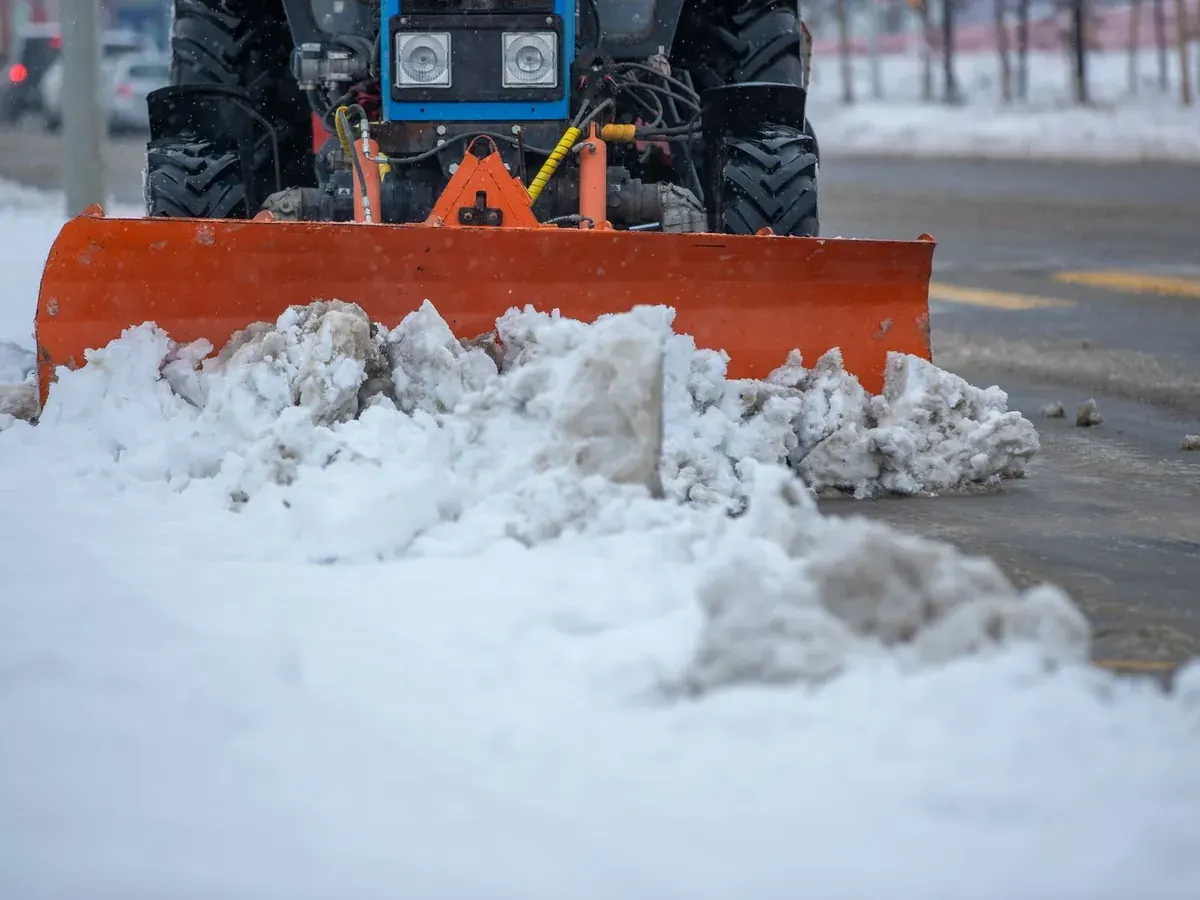
Services available in Sandusky County
A complete suite of winter management services designed to keep the county moving.
Residential removal
Keep your driveway and walkways clear all winter long.
Commercial removal
Ensure your business remains open and safe for customers.
Salting & ice control
Prevent slips and falls with our proactive salting services.
Emergency service
24/7 rapid response for severe winter storms and blizzards.
Seasonal contracts
One fixed number for unlimited visits, all winter.
Specialty properties
24 industry-specific programs, warehouses to churches.
About Sandusky County
Sandusky County was formed on February 12, 1820, from part of Huron County, and takes its name from the Sandusky River — from a Wyandot word for water. Fremont, the county seat and largest city, grew up at the head of navigation on the river, on the site of Fort Stephenson.
The county covers about 408 square miles and has roughly 59,000 residents. The Sandusky River runs diagonally through it to Sandusky Bay, and the Ohio Turnpike and U.S. 20 cross it east to west.
History, attractions & landmarks
Fremont is home to Spiegel Grove and the Rutherford B. Hayes Presidential Library and Museums, and to Fremont Speedway. The H.J. Heinz ketchup plant here has been described as the largest in the world, and the spring walleye run on the Sandusky River draws anglers from across the Midwest.
Clyde is a long-time appliance-manufacturing town, Green Springs is known for its mineral spring, and Bellevue, Gibsonburg and Woodville anchor the corners of the county.
Sandusky County by the numbers
A snapshot from the latest U.S. Census and public data.
About 25,000 households, nearly three-quarters owner-occupied, in a county of small cities and farm townships. Large food and appliance plants run shifts around the clock, and their lots and docks are the most time-critical pavement in the county.
Neighborhoods we serve
We clear driveways, sidewalks and lots across all of them.
Area codes & ZIP codes we cover
Sandusky County is served by area code 419, with 567 as an overlay. Our coverage spans every ZIP code in the county.
Measured, not estimated
No two winters here are the same
This is the number that should decide how you buy snow removal in Sandusky County — and it is the number most quotes never show you.
Annual snowfall at Toledo Express Airport, 2014–2023
Where the snow falls across a season
Average inches by month, 1991–2020 normals — 37.4″ across the season.
What the spread means for your contract
A 5.7× spread is the whole argument for a seasonal plan. Per push, a 77.4″ winter costs you roughly 5.7 times what a 13.6″ winter does, and you find out which one you bought in February. A seasonal number is the same either way — you are buying the average and we carry the variance.
Per push wins in a mild winter, and we will tell you so: if you can absorb a variable line and you are not on a steep drive, it is the cheaper bet more often than not. What it is not, is predictable.
See the figures as tables
| YEAR | INCHES | CM |
|---|---|---|
| 2023 | 13.6″ | 35 cm |
| 2022 | 27.9″ | 71 cm |
| 2021 | 38.8″ | 99 cm |
| 2020 | 25.6″ | 65 cm |
| 2019 | 27.7″ | 70 cm |
| 2018 | 24.2″ | 61 cm |
| 2017 | 23.1″ | 59 cm |
| 2016 | 36.1″ | 92 cm |
| 2015 | 46.4″ | 118 cm |
| 2014 | 77.4″ | 197 cm |
| MONTH | AVG | SNOW DAYS |
|---|---|---|
| October | 0.1″ | 0.1 |
| November | 1.7″ | 2.0 |
| December | 6.5″ | 6.3 |
| January | 12.3″ | 9.2 |
| February | 10.2″ | 7.8 |
| March | 5.3″ | 4.3 |
| April | 1.3″ | 1.2 |
| Season | 37.4″ | 30.9 |
Two different measures, deliberately kept apart: the yearly figures are published annual totals for the airport station, and the monthly figures are the 1991–2020 normals. They rest on different periods and bases, so the ten-year average above is not comparable to the 37.4″ seasonal normal — treating them as one series would invent a trend that is not in the data. Source: NOAA (ACIS station records and NCEI 1991–2020 climate normals).
The snow belt, in numbers
Your street, not your metro
Toledo’s 37.4″ is the best long-term figure for this end of Lake Erie, and it is 26 inches short of Cleveland’s. Sandusky County sits in that lighter-snow zone west of the snow belt. On average it is a per-push county. The catch is the word average, in a place where one recent winter brought more than five times the snow of another.
Average annual snowfall across Ohio
Average annual snowfall, 1991–2020 normals from the US National Centers for Environmental Information. Source →
Local winter challenges
The land here is former lake bed — flat, open and exposed — so wind is a bigger factor than snowfall. A few inches will drift lanes, lot entrances and the long straight township roads shut. Storms often arrive as rain or freezing rain before turning to snow, which bonds ice to the pavement, and temperatures near Sandusky Bay sit close to freezing for long stretches. Pre-treatment and a return visit after the wind matter more than blade width.
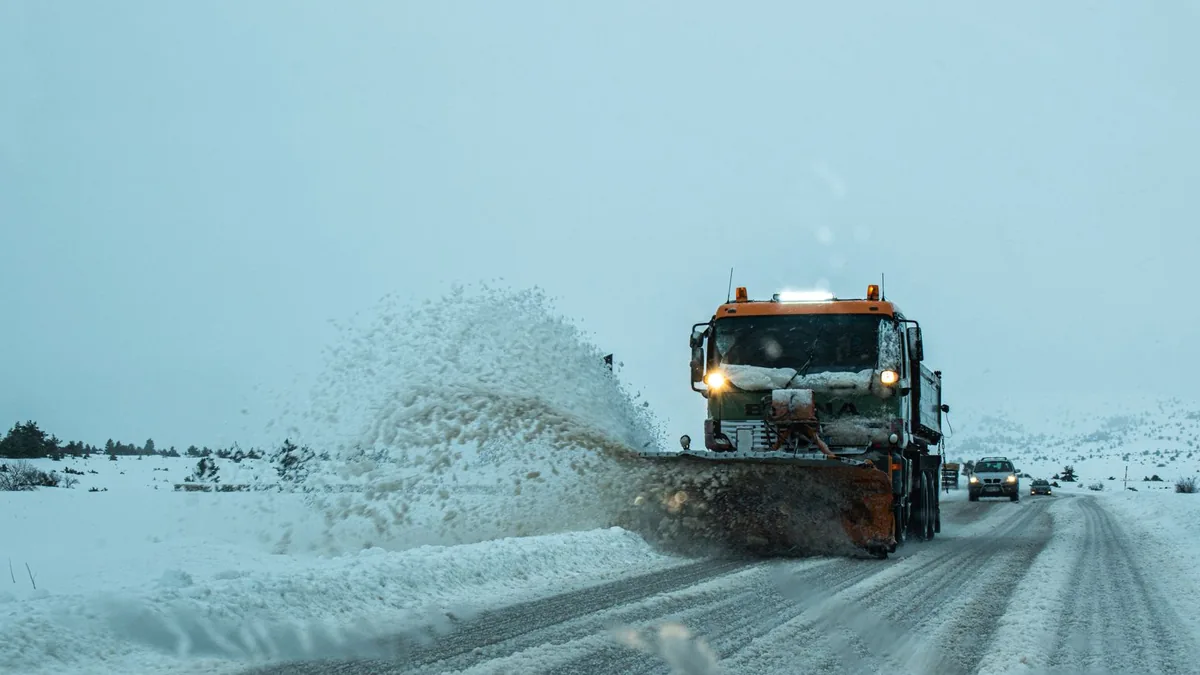
What snow removal costs here
Pricing varies with the size of the property, the type of service and the specific location. For residential properties, a standard two-car driveway typically ranges from $45 to $75 per push depending on snow depth. Seasonal contracts generally start around $400 to $800 for the season.
Commercial pricing is highly customized. A small retail lot in Fremont might run $150 per push, while a distribution center, plant or medical campus that needs dedicated on-site equipment is priced through a full seasonal management contract. Full structures are in the pricing guide.
Get the number for your address
Ranges only get you close. We measure the drive on the map, check it against this season’s routes, and come back with an itemized figure — usually the same day.
Who clears what
The rules where you live
Ohio has no statewide shoveling law, so the rule depends on which side of a municipal line you are on. The pattern is consistent, though: the city or township plows the street, and everything between the street and your front door is yours — including the berm the plow leaves across your apron and, in most incorporated places, the public sidewalk in front of the property.
And the liability question
On the liability question, Ohio is not what most people assume: the Ohio Supreme Court has held that property owners are generally not liable when someone slips on natural accumulation on a public sidewalk, even where a municipal ordinance requires them to clear it. That is general information rather than legal advice, and we are not attorneys — it also does not carry over to commercial premises, where the duty owed to invitees is a different question entirely and where the visit documentation in a commercial contract does real work. If a specific claim is in play, ask a lawyer, not a plow contractor.
The owner of each parcel abutting a sidewalk must clear snow and ice within a reasonable time, ordinarily not more than 48 hours after the storm ends.
source →Cities we serve in Sandusky County
Nearby counties
Local resources
Sandusky County snow removal questions
Is per-push or seasonal better in Sandusky County?
For a flat residential drive, per push usually costs less here, because average snowfall is modest. A seasonal contract is insurance against the occasional very heavy winter, and most commercial sites choose it for the fixed number.
How do you handle freezing rain?
Sites are pre-treated when the forecast calls for ice or for rain changing to snow, so it does not bond to the pavement. Afterwards the de-icer is matched to pavement temperature.
My lane drifts shut after it is plowed. Do you come back?
On a seasonal plan, yes. Drift-prone lanes and lot entrances are flagged for a wind check after the snow stops.
Can you have a plant open before first shift?
Yes. Manufacturing and food-processing sites in Fremont and Clyde are scheduled against shift times, with docks and employee lots cleared first.
Do you cover the rural townships?
Yes. All of the county’s townships are on route, from Woodville and Gibsonburg in the west to Bellevue and Green Springs in the east.
What is your trigger depth for plowing in Sandusky County?
Two inches is the standard residential trigger and one inch or zero tolerance is standard for commercial properties. You pick the number at signing and can change it during the season — steep drives and early commutes usually want one inch.
Do you offer seasonal contracts for commercial properties in Fremont?
Yes, across all of Sandusky County. Commercial seasonal contracts fix one number for the full season with unlimited visits at your trigger, salt metered separately or folded in, and a certificate of insurance on file for your risk team.
Do you provide snow hauling when a lot runs out of room?
Yes. Once the piles start eating stalls and sightlines, loaders stack and relocate them, and we haul off site when there is genuinely nowhere left to put it. Where the piles go is planned at the site walk, before the first storm.
Do you clear sidewalks for businesses in Clyde?
Yes. Hand crews and blowers cover walkways, entries and ADA access on their own rotation, which is where most slip claims originate and where a plow never reaches.
Is your team available 24/7 for emergency plowing?
Yes. Someone is always on call during winter weather, with medical access, senior access and high-traffic commercial properties prioritized first. Non-customers can call too.
Ready for winter in Sandusky County?
Don’t wait for the first blizzard. Secure your snow removal contract today and guarantee your property stays clear and safe. Nothing is charged until the first plow drops.
In a hurry? Text a photo of the property to 1-866-426-5222 and we will price it the same day.