Current Conditions: All service areas are currently clear of snow and freezing temperatures.
Snow Removal in Kirtland Hills, Ohio
Professional, reliable snow plowing, salting, and ice control for estates and residences across the village — from Little Mountain and Baldwin Road to the Chardon Road corridor and every wooded private drive in between.
Kirtland Hills snow removal is estate work, plain and simple. Fewer than 700 residents live in this village of five-acre lots, wooded ridges, and some of the longest private driveways in Lake County — including the historic slopes of Little Mountain, where Cleveland’s summer elite built their retreats a century ago. All of it sits on snowbelt high ground that catches lake-effect bands hard. Local Snow Removal keeps driveways, courts, and lanes across the village clear and safe all winter, with equipment staged by zone before each storm and 24/7 dispatch behind it.
Snow Removal in Kirtland Hills, Lake County
The village rises south of Mentor between Kirtland and Concord, crossed by Chardon Road (US-6) and Baldwin Road, with the wooded summit of Little Mountain marking its high point and the Holden Arboretum’s lands brushing its edges. The Cleveland NWS station averages 63.8 inches of snow a year, and this elevated ground routinely sees more — the hills wring extra snow out of every band that pushes inland. You can read more about the village on Wikipedia or U.S. Census data.
Our operation is built for estate-scale properties. We track pavement temperature and forecast bands for the high ground specifically, pre-positioning plows and de-icing material close to the routes they serve. Dispatch is automatic once snow reaches your contracted trigger depth. Quarter-mile drives with grades and switchbacks, stone-pillared entrances that demand careful blade work, courts and turnarounds that need room for guests — this is the work our village routes are drawn around, and it is finished to a standard that matches the properties. Whatever you own here, you get the same disciplined, insured, around-the-clock coverage all season.
Services Available in Kirtland Hills
We offer a complete suite of winter management services designed to keep Kirtland Hills moving.
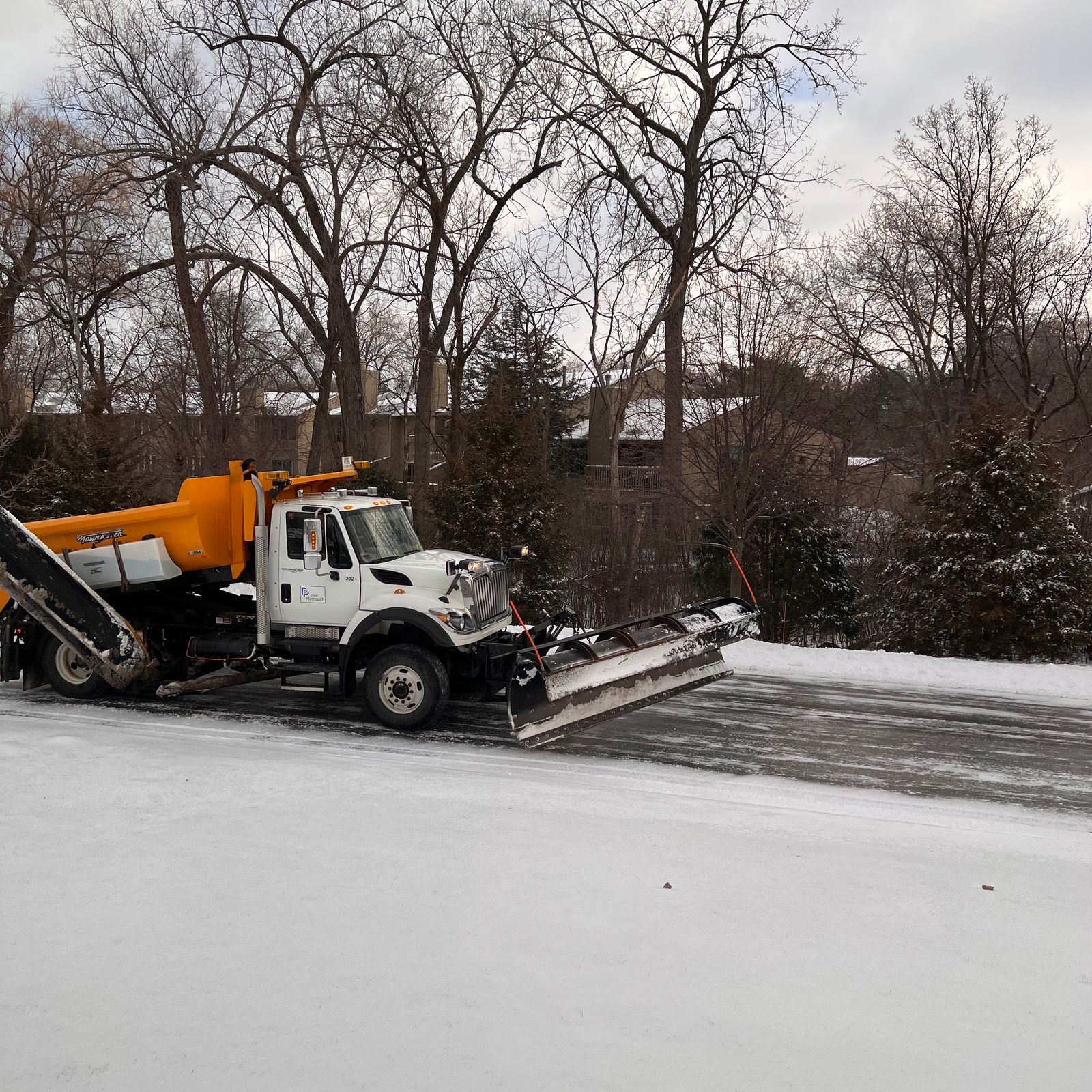
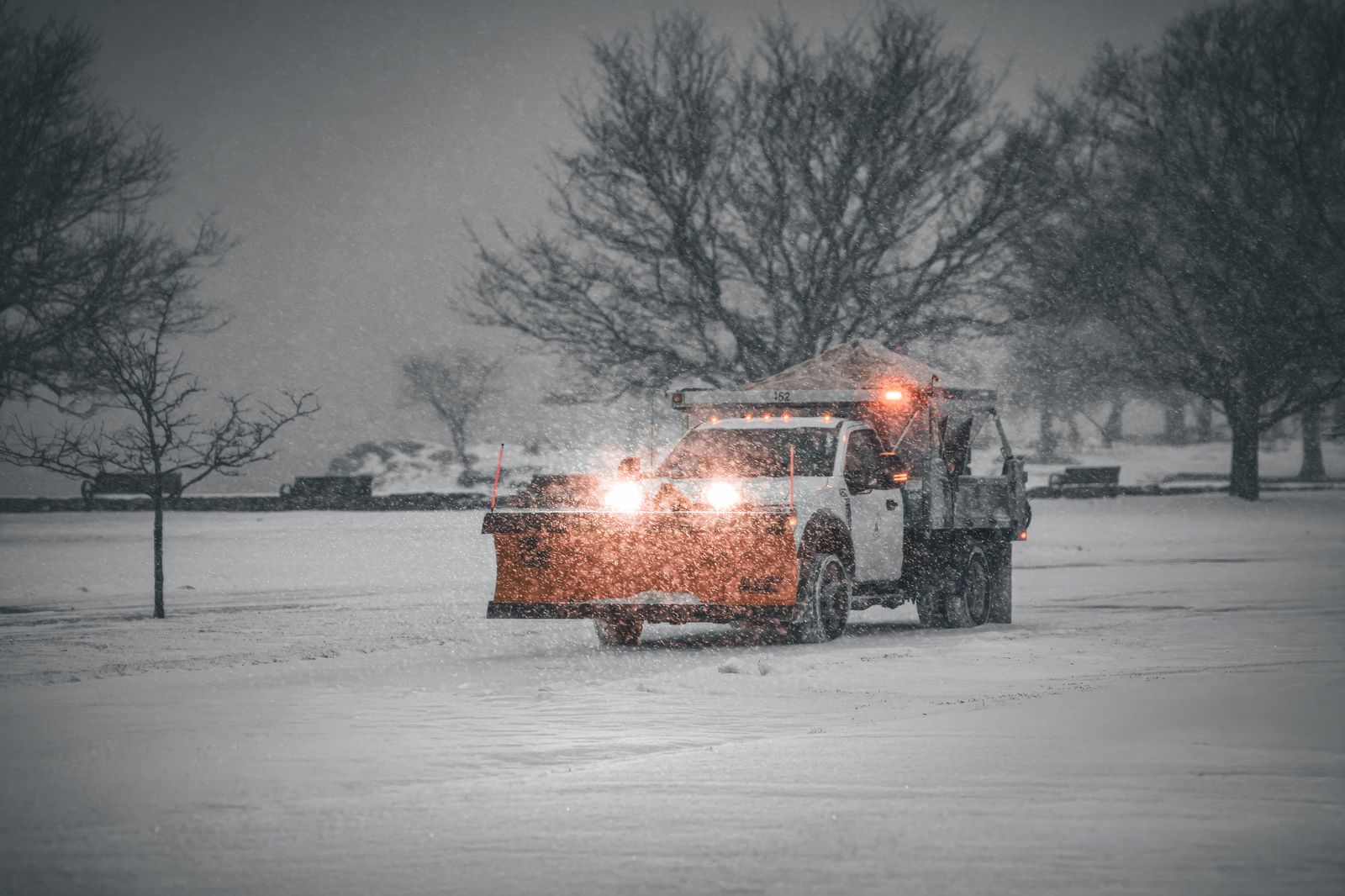
Residential Snow Removal
Driveways and walkways cleared before the morning commute, dispatched automatically at your trigger depth. You never have to call.
Commercial Snow Removal
Zero-tolerance programs for retail, office, medical, and industrial properties citywide.
Salting & Ice Control
Brine pre-treatment and temperature-matched de-icing keep black ice off your pavement through every freeze-thaw cycle.
Emergency Snow Removal
When a heavy band or ice storm hits, our 24/7 emergency crews dig you out.
7 Reliable Reasons to Trust Local Snow Removal in Kirtland Hills
- Pre-staged, rapid response. Equipment is positioned along the ridge before the first flake falls, so contracted properties are cleared fast.
- Fully licensed and insured. General liability, commercial auto, and workers’ comp on every job.
- Estate-scale expertise. Long private drives, gated entrances, courts, and guest parking handled with finish-quality care.
- Proactive ice control. Hilltop exposure plus wooded shade means black ice; we pre-treat and de-ice before it forms.
- Transparent, upfront pricing. Flat, agreed-upon rates and clear seasonal contracts — no surprise invoices.
- Local crews who know the terrain. Operators who understand which grades demand chains, where the ridge drifts, and how the woods hold ice.
- 24/7 emergency dispatch. Someone is always on call, with medical and senior-access sites first.
Those seven principles are why property owners across the village renew with us winter after winter. Snow and ice are safety and liability issues first and conveniences second; an impassable drive on a hill property is not an inconvenience, it is a stranded household. Our job is to take that risk off your plate entirely, so you can focus on your family while we handle the pavement. Finally, a word about communication, because it is half of good winter service: every contracted property has a service record, every event has a plan, and every customer knows how to reach a human being at two in the morning. Winter is stressful enough without wondering whether your crew will show up; our answer is a documented route, a named operator, and a phone that gets answered.
About Kirtland Hills: History, Attractions & Local Landmarks
The village is home to landmarks our crews work around all winter. Notable spots include historic Little Mountain — the wooded summit where Gilded Age Cleveland built its summer colony — the Holden Arboretum lands on the village’s flank, the Chardon Road corridor, and the estate lanes off Baldwin and Booth Roads. Click any to open it on Google Maps:
Incorporated in 1926 to preserve its rural estate character, the village has held that line for a century — five-acre zoning, wooded ridges, and a hush that deepens beautifully under fresh snow. Keeping it beautiful and passable at the same time is the winter job. Households here often include staff, deliveries, and visiting family who all need reliable access; the shaded drives hold ice for days after the open roads have dried; and the ridge catches more snow than the valley towns on either side. Our crews keep the village’s drives, courts, and lanes clear through every storm with the discretion and finish quality these properties expect. When lake-effect bands set up over the county, this high ground is among the first places we watch. That local rhythm is why we staff the way we do: the same operators return to the same routes all season, learning every apron, culvert, and low spot, so service gets faster and cleaner as the winter wears on rather than resetting with every storm.
Kirtland Hills by the Numbers: Census & Local Data
Here is a snapshot of the village from the latest U.S. Census and public data:
Those numbers cover the greater ZIP 44060 area shared with Mentor, and they shape how we plan winter operations here — though the village itself is a different world: roughly 640 residents on some of the largest residential parcels in Ohio. Estate-scale properties mean estate-scale winter work — drives measured in fractions of a mile, multiple structures needing access, and finish standards that rule out rushed passes. An older-than-average population adds medical-priority addresses to our winter list. Every household here needs safe, reliable access from the first storm to the last thaw, and delivering it discreetly is exactly what we do. Snow piled at the road by the county plows gets pushed back as part of the route, so corner properties and mailbox approaches are not left walled in after the trucks pass, and hydrant access stays open all season long. Our operators also carry calcium blends for the coldest nights, when ordinary rock salt quits working — a small detail that keeps entrances usable through the bitterest stretch of the season.
Popular Kirtland Hills Neighborhoods We Serve
From the historic summit lanes of Little Mountain to the estate drives off Baldwin and Booth Roads, we clear driveways, courts, and lanes in every corner of the village. Dense routes matter even in estate country: neighboring properties on the same crew’s route get cleared faster and priced better, storm after storm. Click any neighborhood below to see it on Google Maps:
Kirtland Hills Area Codes & ZIP Codes We Cover
Kirtland Hills is served by area code(s) 440. Our coverage spans every ZIP code in the village. Click any to open it on Google Maps:
If your ZIP code is on this list, you are inside our service area. ZIP 44060 covers the village along with neighboring Mentor. The ZIP is linked to Google Maps so you can pinpoint your location and see exactly where our routes run. And if you are just over the village line, we cover every neighboring community too.
Kirtland Hills Snowfall: 10-Year History & Monthly Averages
How much snow does the village get? The Cleveland NWS station records about 63.8 inches in an average winter (30-year NOAA normals), and this elevated ridge typically sees more once lake-effect bands push inland and climb. The table below shows total measured snowfall at Cleveland for the last ten years, based on NOAA data via Current Results:
| Year | Snowfall |
|---|---|
| 2023 | 23.0″ |
| 2022 | 54.9″ |
| 2021 | 32.4″ |
| 2020 | 49.3″ |
| 2019 | 37.0″ |
| 2018 | 42.5″ |
| 2017 | 44.9″ |
| 2016 | 42.2″ |
| 2015 | 47.0″ |
| 2014 | 84.3″ |
| Month | Avg. Snowfall | Avg. Snow Days |
|---|---|---|
| October | 0.1″ | 0.2 |
| November | 4.5″ | 3.8 |
| December | 12.2″ | 8.4 |
| January | 18.4″ | 13.5 |
| February | 15.1″ | 10.5 |
| March | 10.8″ | 7.2 |
| April | 2.7″ | 2.1 |
Snow typically starts in November, peaks in January and February, and can linger into April, which is why our seasonal contracts cover the full winter window. The ten-year table shows how wildly totals swing from one winter to the next, and the ridge adds its own lake-effect bonus on top of whatever the official Cleveland gauge records. A mild December is no guarantee against a punishing February, so we build contracts around the whole season and our customers are covered either way. Little Mountain’s summer colony was famously chosen for its cool air and deep snows — the snows have not changed, and neither has the need to manage them properly. One more note on the numbers: airport gauges measure what falls, not what moves. Out here a single windy afternoon can rearrange a week of snowfall, burying one driveway while scouring the next bare, which is why our operators judge conditions street by street instead of trusting a regional total. The season is long, the weather is patient, and the only reliable strategy is a crew that is already committed to your property before the first storm forms — which is exactly what a signed agreement buys.
Local Winter Challenges in Kirtland Hills
The defining challenge here is the drives themselves. Long, wooded, and often steep, they hold ice in permanent shade, climb grades that defeat consumer equipment, and demand blade work that protects stone, brick, and decorative aprons. Our operators run equipment matched to estate work, treat the steep sections before storms rather than after, and finish entrances and courts by hand where the property calls for it.
Elevation is the other factor. The ridge catches more snow than the surrounding towns and drifts harder in any wind, while the wooded shade means pavement that never sees winter sun and refreezes night after night. That is why plowing alone is never enough here: timed salting and brine pre-treatment matter just as much, scheduled around actual pavement temperature rather than a fixed calendar — and monitored through the season, because a shaded drive in this village can stay icy a week after the last flake fell. Route timing is rechecked before every event, salt and fuel are topped off at the start of a storm rather than mid-event, and service logs are kept for every visit so customers always know what was done and when. During multi-day events we publish route status, so you are never left wondering whether anyone remembered your street.
How Much Does Snow Removal Cost in Kirtland Hills?
Pricing here depends on property size, service level, and location. Residential driveways generally run about $40–$95 per push, with seasonal contracts commonly $400–$850 for the winter. Commercial pricing is quoted per property after a quick site assessment. Our Pricing Guide explains every contract structure, and a free, no-obligation estimate is the fastest way to a firm number.
Estate properties are quoted individually by their real footprint — drive length, grade, court and turnaround area, and any outbuilding access — so you are never paying a formula price built for a suburban lot. Most owners here choose flat seasonal contracts that fix the winter cost regardless of how many storms arrive, with service standards written into the agreement. Salting, ice control, and hand-finish work can be bundled in or billed separately, and every quote is written up front with no hidden charges after a big storm. If you are comparing bids, make sure every quote covers the same footprint and finish standard, or the cheaper number may simply be buying you less. Comparing seasonal proposals is worth ten minutes of any owner’s time: check that the trigger depth, the walkway scope, and the return-pass policy all match before comparing prices, because the cheapest bid is usually the one that quietly promises the least. We write all three into every agreement, in plain language, before the first flake falls. New customers are welcome mid-season as capacity allows, though the best pricing and guaranteed slots always go to households that sign before the first storm — routes are drawn in the fall, and early signers anchor them.
Get a Custom Quote for Your Kirtland Hills Property
Free, no-obligation estimate tailored to your property anywhere in the village.
Request PricingNearby Communities We Serve in Lake County
Our crews run routes across the hills of western Lake County, so neighboring communities are often cleared on the same pass. Select your area below for local coverage details, or request a quote and we will confirm service to your exact address before the season begins.
Frequently Asked Questions
Do you serve every part of the village?
Yes. From the Little Mountain lanes to the estate drives off Baldwin, Booth, and Hart Roads, the whole village is inside our coverage. Call and we will confirm service to your exact address.
Can you handle long, steep estate driveways?
Yes — they are the signature property type here. We run equipment matched to grades and length, treat steep sections before storms, and finish entrances and courts to the standard the property deserves.
Will plowing damage stone or decorative paving?
No. Blade heights and edge guards are set for stone, brick, and decorative aprons, and hand-finish work is available wherever a machine should not go.
What trigger depth do most local contracts use?
Most agreements here dispatch automatically at 2 inches, and many owners choose lower triggers for critical access. You pick the trigger when you sign and never have to call crews out yourself.
How much snow does the village actually get?
The official Cleveland gauge averages 63.8 inches, and this ridge typically exceeds it once lake-effect bands push inland. Individual winters swing widely, which is why seasonal contracts are standard here.
Do you offer seasonal contracts?
Yes — they are what nearly every owner here chooses. A flat seasonal rate fixes your winter cost with service standards written into the agreement; per-push billing is available if you prefer.
Is salting included or separate?
Either. Because shaded estate drives refreeze night after night, ice control often matters more than plowing here. Brine pre-treatment and temperature-matched de-icing can be bundled into your contract or billed per application.
Can you coordinate with household staff or property managers?
Yes. We work to whatever protocol the household prefers — gate codes, notice before arrival, service logs after each visit — with one accountable crew all season.
Are you licensed and insured?
Fully. General liability, commercial auto, and workers’ comp on every job, with certificates available on request.
How fast do you respond during a lake-effect event?
Contracted properties are serviced automatically by trigger depth and re-serviced as bands re-load, so you are cleared repeatedly through a long event rather than once at the end, with medical and senior-access sites first.